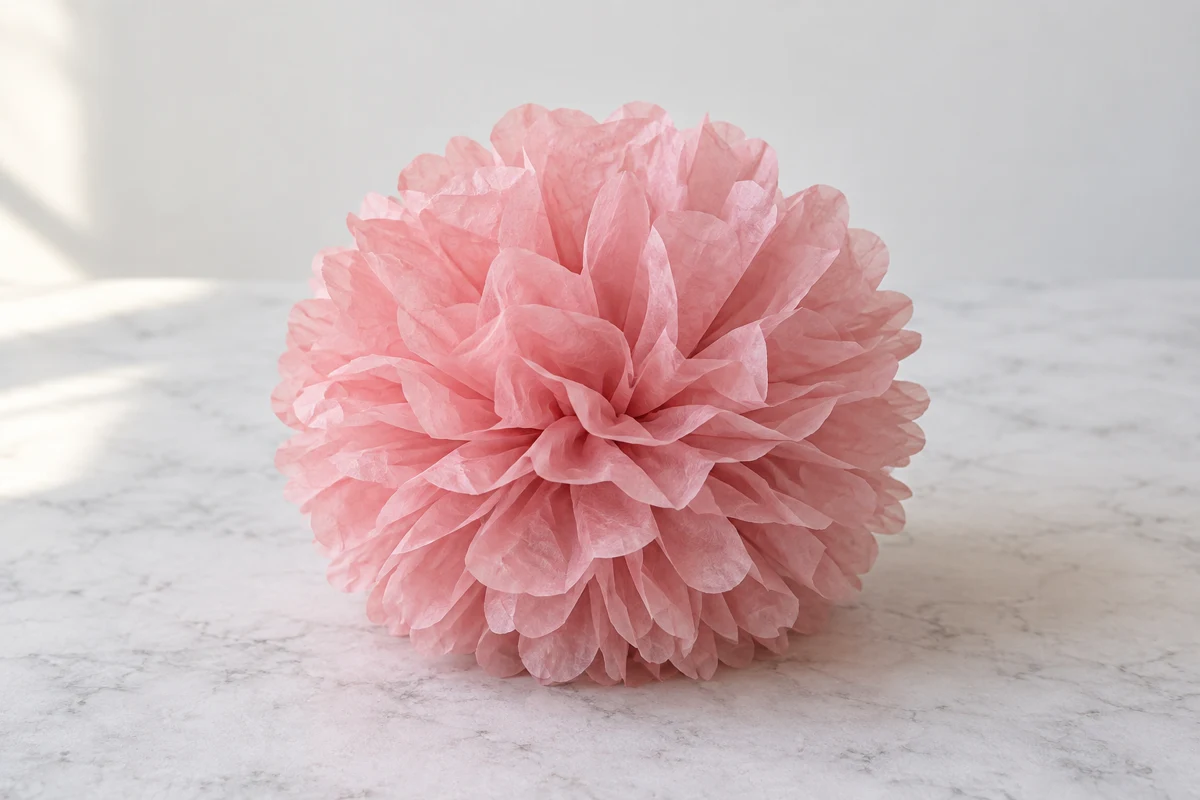
A small tissue-paper pompom
Open tissue layers gradually; pulling harder is rarely the answer when a pompom catches.
Prepare a small, even stack
Stack six to eight matching tissue rectangles. Pieces about 6 by 8 inches, or 15 by 20 centimeters, make a manageable small decoration. Tissue looks darker in a stack than it will when opened. Hold one sheet against the intended background before committing to a color combination.
Align the edges and accordion-fold the stack from a short side, using folds about ¾ inch apart. Press them with your fingers rather than crushing the delicate paper with a hard tool. If the layers slide, slow down and realign the next fold. Keeping the stack even now makes the ends easier to shape later.
Secure the middle
Find the center of the folded strip and tie a fine string around it. The tie should hold the layers without cutting into them. Leave a longer end if the pompom will hang. Round or gently point the two ends of the folded stack with scissors. Several calm cuts are better than forcing the blades through every layer at once.
Fan out one half carefully. Lift its top sheet close to the middle and bring it upward a little at a time. Hold a broad section instead of tugging one corner. Open a layer on the other half, then continue alternating. For a round pompom, direct half the layers upward and half downward rather than pulling everything toward one side.
Adjust the shape without tearing more
A small tear often disappears among neighboring layers. Do not immediately cut away extra paper in pursuit of a perfect edge. Spread the adjacent sheets first and judge the shape from a short distance. If the center tie is too tight, loosen it gently before increasing the pull on the tissue.
Keep the decoration dry and away from heat. Hang it clear of lamps and where nobody is likely to tug its string. An opened pompom needs space around it in storage. Once compressed flat, its fine folds are difficult to restore completely. If you are preparing decorations ahead of time, the folded but unopened stacks take up less room and travel more easily.