Dry and handle stamped impressions
A stamped impression may look dry before it is ready to be stacked, folded or rubbed.
Test the ink and paper together
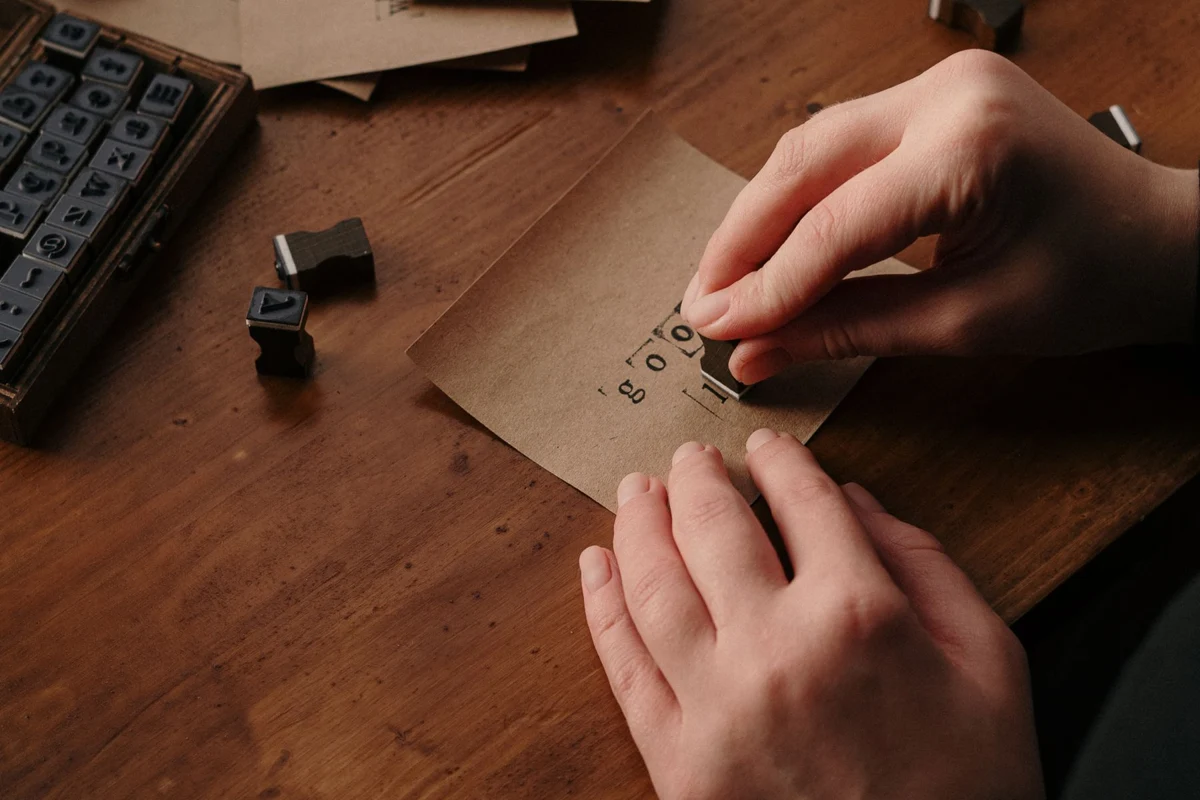
Stamp ink behaves differently on absorbent paper and a smooth coating. A time estimate alone cannot tell you when your particular impression is ready to handle. Print an extra sample on an offcut of the same material and keep it beside the finished work. Test that sample instead of touching the card repeatedly.
Ink quantity matters too. An over-inked stamp leaves thicker areas that remain vulnerable longer. If fine details merge, make a few impressions on scrap without adding more ink. The next clear sample helps distinguish a drying problem from a stamp that was simply carrying too much color.
Reserve a clear drying area
Lay printed pieces separately on a clean, dry surface. Do not overlap them while any areas remain wet. Note the approximate printing time beside the sample when several inks or papers are drying together. That avoids handling each piece just to remember which batch it belongs to.
Check a small area of the sample with clean scrap paper. Rubbing is a more demanding test than a light touch; that distinction matters for a sheet that will later be folded or stacked. Some inks need a particular fixing method. Follow the specific product instructions rather than assuming every stamp ink should be heated.
Consider the next operation too. An impression that survives a light touch may still smear beneath an eraser. Remove pencil guides before stamping, or test the complete sequence on your sample. Adhesive later applied to the reverse can also distort the sheet and press the image against the work surface. Keep the printed area clear during assembly instead of resting it on a cutting mat that may still carry adhesive. Testing the whole sequence tells you more than checking the ink in isolation.
Avoid turning a small mark into a large one
Frantic wiping rarely improves a fresh fingerprint. Let the mark dry before deciding whether a small paper accent can cover it sensibly or a new blank would be better. Painting over a broad area often changes more of the design than the original smudge did.
A clean interleaving sheet can protect finished cards from direct contact, but it does not replace proper drying. Close ink pads after use and store them as the manufacturer directs so the surface does not dry unnecessarily. Keep a successful sample labeled with the paper and ink combination. That record is more useful next time than assuming all black stamp pads behave alike.