Fold a card without cracking the edge
Paper direction and a light score can make the difference between a crisp fold and a cracked card.
Check the direction before cutting
A sheet of cardstock may look perfectly smooth until a pale, rough line appears along its fold. Pressing harder usually makes that damage worse. Start by checking which direction the paper bends more easily. Where possible, place the card's fold parallel to the grain. On patterned paper, this may require choosing between the direction of the print and the direction that folds cleanly.
Gently bow the sheet one way, then the other, without creasing it. Compare the resistance. If the difference is unclear, use two small offcuts to test folds in opposite directions. A coated surface can also crack differently from the fibers underneath, so a real fold is more informative than a thickness label alone.
Score without cutting through
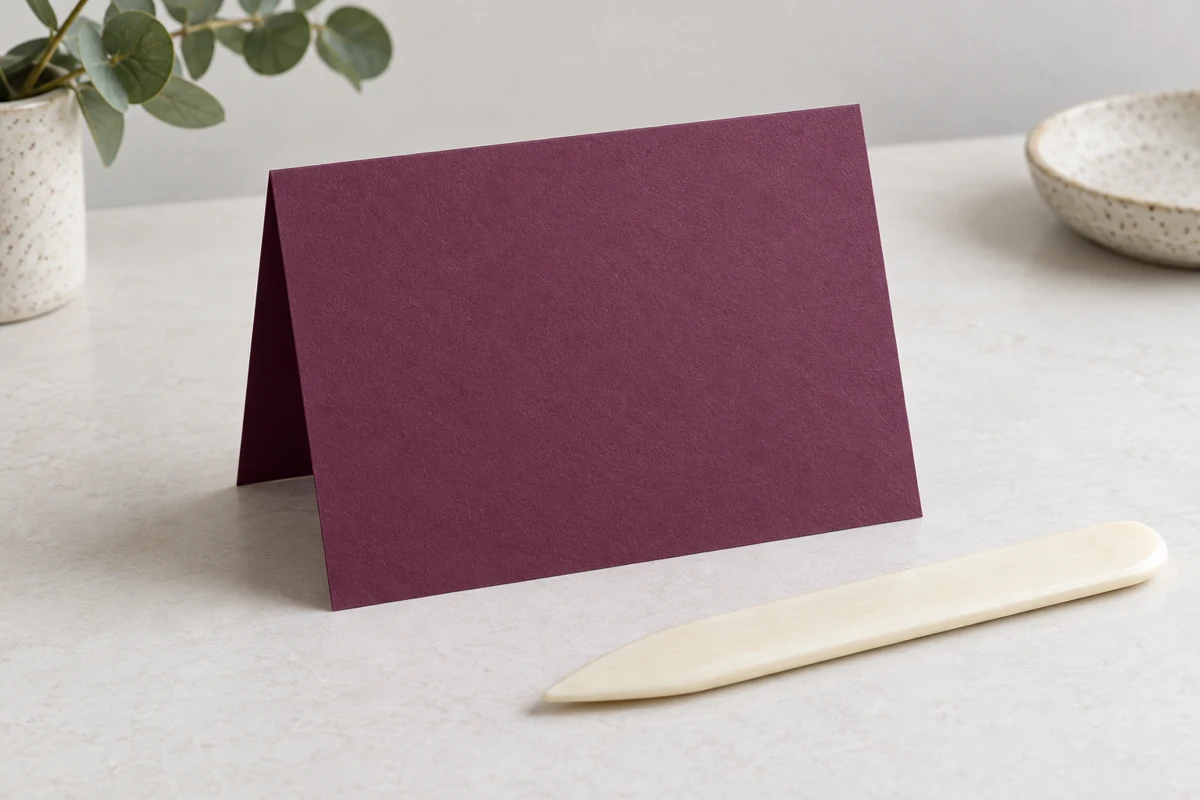
For a card measuring about 4 by 6 inches when closed, cut an 8-by-6-inch rectangle. Mark the midpoint of each 8-inch edge. Place a ruler between those marks and run a blunt scoring tool along it with light pressure. You want an indentation, not a cut. A craft knife is not a substitute for a scoring tool.
Test which side gives the cleaner outside edge after scoring; coatings and scoring tools vary. Bring the short edges together, align the corners, and close the card slowly. Once everything lines up, smooth the crease with a bone folder. Avoid repeatedly folding the same hinge back and forth, which weakens it without making the original alignment better.
Keep the finished card flat
Rest the folded card between clean sheets under a book before adding decorations. Wet adhesive spread across just one face can pull a flat card out of shape. Arrange larger pieces without glue first, then test a thin application of your chosen adhesive on scrap stock. Let that test dry completely before judging the result.
A faint pale line can sometimes become part of the design beneath a narrow paper band. A split spine, however, is usually a reason to cut another blank rather than bury the damage in glue. Keep one successful sample with a note about the paper and fold direction. That small reference is especially useful when making several cards from the same pack.