A thank-you card built around one idea
One shape or a small material contrast can leave space for the message that makes a thank-you card personal.
Begin with the specific thanks
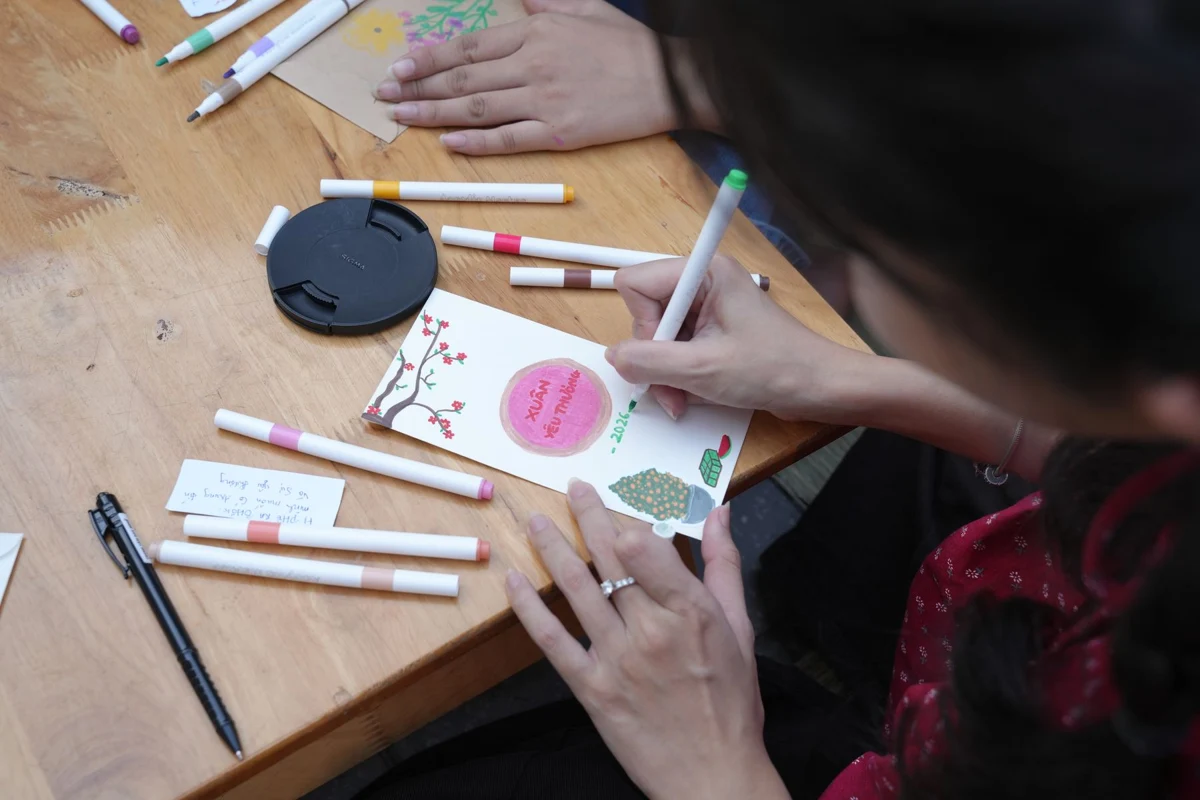
Draft the message before choosing paper colors. What are you thanking the person for? A concrete sentence about an invitation, help or a meal gives the card more individuality than an elaborate front with a general greeting.
The decoration does not have to illustrate the event. One leaf shape, a fabric rectangle or a narrow paper strip can be enough. Choose one idea and leave the rest of the area quiet so the message and decoration do not compete.
Make one contrast work
Place the proposed shape loosely on a folded card. Look at it both closed and open. A heavy embellishment near the opening edge may affect how the card rests differently from a light paper piece.
Contrast can come from color, texture or shape. It does not need to use all three. A small textured patch already stands out on smooth cream stock; adding a shiny border is not automatically an improvement.
Test the adhesive on an offcut. Wet glue can ripple thin paper or show through fabric. Use the amount appropriate to the product and let the card dry open where the construction allows. Keep its inside faces from accidentally sticking together.
Leave room to read
Write the final message once the joint is dry and the card lies flat. Test the pen on the same paper. A heavily textured surface can interrupt fine strokes, while absorbent stock can spread ink.
Leave a margin around the text instead of beginning directly beside the fold. If the message grows longer, use more of the inside rather than continually shrinking the lettering. Ordinary handwriting does not need to imitate formal calligraphy.
Choose an envelope that accepts the finished card, including its added detail. For mailing, thickness, weight and protruding pieces may affect service requirements. Check the carrier's current conditions rather than assuming ordinary postcard rules apply.
A group of thank-you cards does not have to look manufactured as a set. You can repeat the simple visual shape while making each note specific to the recipient. Its personal quality comes from what you actually mean to say, not from the number of craft steps on the front.