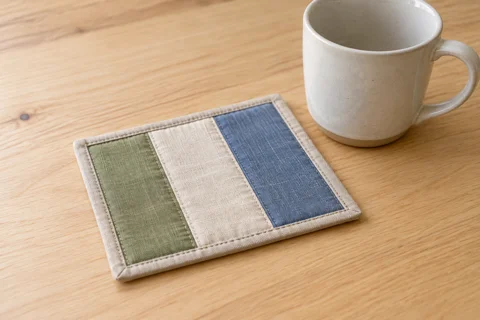
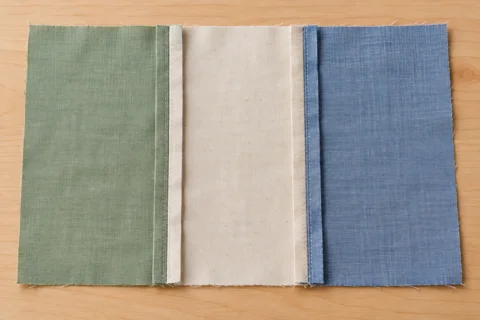
A placemat from two layers of fabric
Two fabric layers make a flat placemat that folds and washes without the bulk of batting.
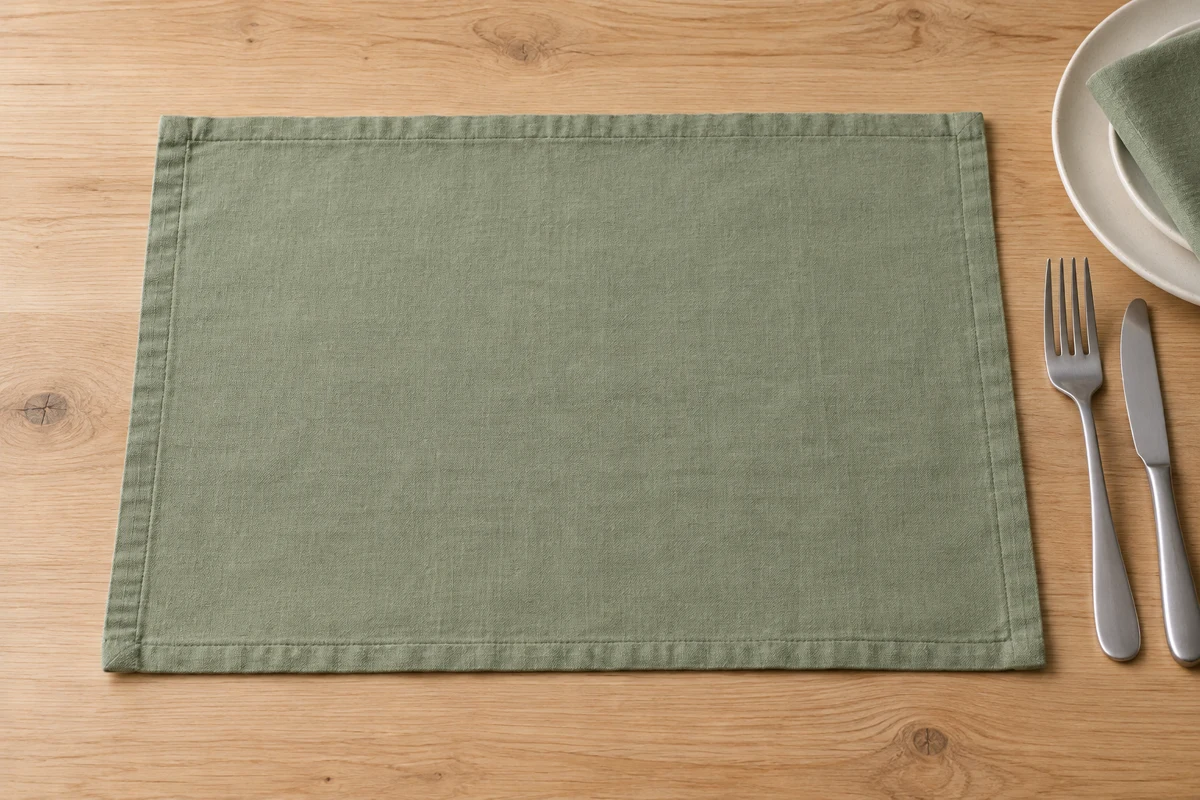
Check the size against a place setting
Arrange a plate, flatware, and glass on a paper rectangle of the proposed size. A mat does not have to contain every item completely, but ending directly beneath the edge of a utensil can be awkward. For a finished mat about 42 × 32 cm, cut two pieces 44 × 34 cm, approximately 17⅜ × 13⅜ inches. These measurements include 1 cm seam allowances.
Choose fabrics with compatible care requirements and similar behavior in washing. A stiff face fabric paired with a loose, thin backing may become wavy. Prepare both before cutting according to their instructions. A contrasting reverse makes the mat reversible, but both colors still need to remain stable through its intended care routine.
Arrange a print around the place setting
A paper window at the finished mat size helps position a large print. Check which parts will remain visible beside a plate. A carefully centered motif may disappear entirely beneath the dishes, making an interesting border area a better choice.
Several mats need not have identical crops. Similar direction and brightness can still make a calm set. Cut and arrange the fronts together before deciding how to use the remaining fabric. A consistent backing can come from another compatible remnant. This keeps the visible design from being dictated solely by the most economical initial cutting layout.
Join the layers while they lie flat
Place the rectangles right sides together and align their edges. Mark an 8 cm turning gap on a long side, away from the corners. Sew around the perimeter with a 1 cm allowance and secure the ends beside the gap. Approach corners slowly instead of dragging the fabric around beneath a lowered foot.
Trim the excess corner tips without cutting the seam and turn the mat. Fold the opening allowances inward. Roll the edges straight between your fingers, then press at a setting suitable for the more delicate material. Neither fabric should pull a narrow strip of the other across the finished edge.
Let one edge seam hold the shape
Topstitch a few millimeters inside the perimeter, closing the turning gap as you go. A second decorative line is optional. If added, mark its route first and check that it does not gather the surface. Dense stitching can noticeably change the feel of a lightweight mat.
After the first wash, lay the mat flat and inspect it. Minor creases may press out according to the care instructions; persistent twisting suggests the two fabrics are responding differently. This is a textile table covering, not tested heat protection. Use a suitable trivet for hot cookware. After a spill, lift the mat and dry the table beneath it rather than assuming two fabric layers will reliably block moisture.