Join patchwork strips without distorted seams
Long strips respond to pulling and uneven edges. A straight join begins before the fabric reaches the presser foot.
Cut without stretching the cloth
Lay the fabric smooth but relaxed. Cut with a dependable ruler and check the strip width in several places. A strip that narrows through its middle cannot be corrected by stretching it against its neighbor. Start with short practice lengths before preparing long pieces for a larger project.
Fabrics with similar structures are easier to combine than very different remnants. A strip cut diagonally across the grain stretches more readily. That may be intentional, but it demands more handling care. Straight-grain cotton is a clearer starting point than jersey or slippery mixed materials.
Establish one consistent allowance
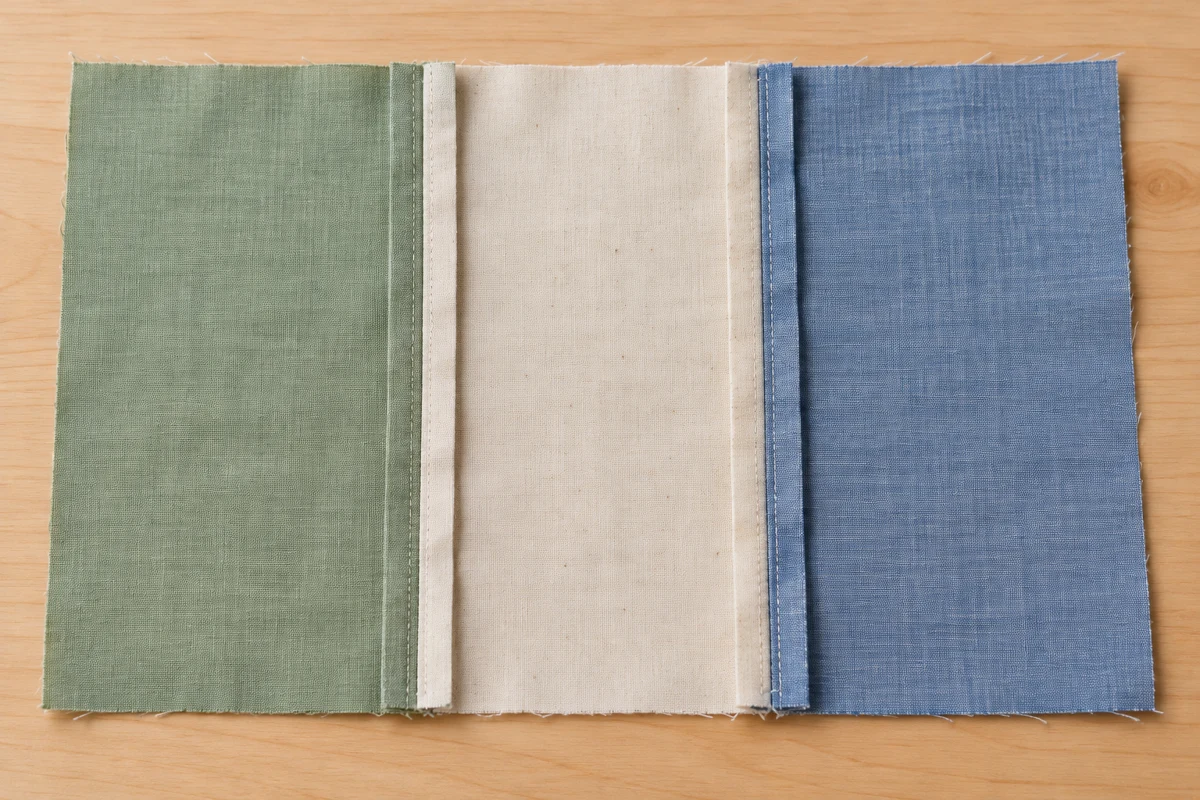
Place two strips right sides together and match their beginning, middle, and end. Hold them at those points without pulling a shorter piece to length. Choose the allowance required by the project and maintain it throughout. A three-strip sample tells you whether the resulting width matches your plan.
Let the machine feed the cloth. Your hands guide the edges rather than pulling in front of or behind the foot. BERNINA's strip-piecing guidance specifically emphasizes allowing the feed mechanism to do the work. If one layer repeatedly creeps ahead, consult the machine instructions about foot pressure or available feeding options instead of compensating with stronger opposing tension.
Open and inspect after each join
Lay the newly sewn seam flat and press as appropriate for the fabric. Open the strips gently and arrange the allowances in the intended direction. Lift the iron to reposition it rather than pushing hard across the fibers. Let the panel cool before measuring it or adding another strip.
After a few joins, check the whole panel. A bowed outside edge may come from varying strip widths, distorted fabric, or uneven feeding. Use a ruler to identify where the deviation begins. Undoing one troublesome seam is generally more useful than trying to press the entire panel square under tension. Leave a little trimming room for the final project shape, but use that margin for small discrepancies rather than to conceal a basic construction problem.