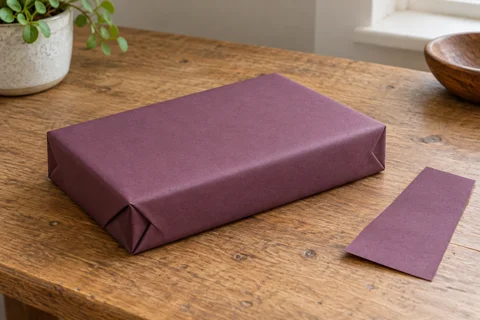
A simple potato stamp for paper
A broad shape and a thin paint layer give potato prints clearer edges than intricate carving.
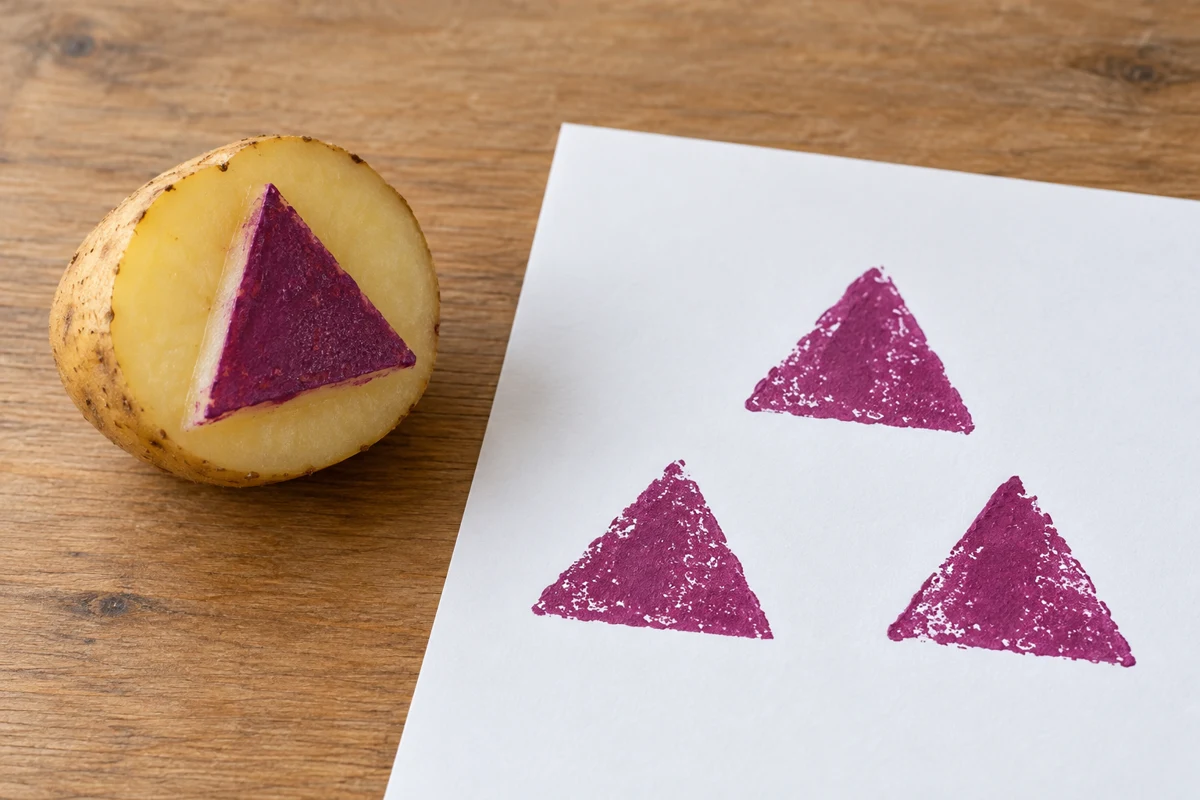
Make a simple raised face
Halve a firm potato on a suitable cutting board. This cutting step is for a capable adult. Blot the cut surface dry with a paper towel. A circle, triangle or broad stripe is easier to print than fine lettering. The finished face needs to meet the paper evenly.
Draw the shape on the cut surface, or lightly impress it with a simple cutter without pushing the cutter all the way in. Remove material outside the shape in controlled cuts so the design stands slightly proud. Cut away from your fingers and keep the potato supported rather than holding it in midair. Children can take over printing with the prepared stamp.
Apply paint instead of dipping
Put a little water-based craft paint on a separate surface. Spread a thin layer over the raised area with a sponge or brush, keeping the recesses mostly clear. Dipping the potato into a puddle tends to fill those recesses and blur the print. Test on an offcut of the same paper you intend to use.
Lower the stamp straight down, press steadily and lift it vertically. Do not slide it across the sheet. If only one side prints, check whether the cut face is uneven or your pressure is off-center before adding more paint. A fresh thin coating may be needed between impressions.
Give the pattern some space
For a regular row, mark a few light reference points rather than a heavy grid. Small variations belong to this printing method and need not be covered with a second, misaligned impression. Leave enough room for each shape to read clearly. On wrapping paper, try one short row first, then offset the next row slightly.
Let the paper dry flat before stacking or folding it. Once a potato has touched craft paint, it is no longer food and should not be saved as a permanent tool. Dispose of it appropriately for the materials used. Clean the work area and tools before returning them to food preparation. A photograph records the successful pattern without requiring you to store a damp vegetable stamp.