Wrap a book neatly with less paper
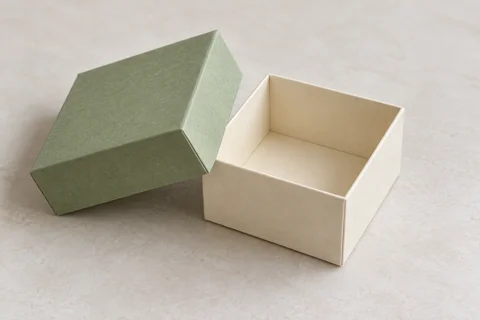
A fitted sheet avoids thick folds at the ends while giving the book's cover room to move.
Measure with a dry wrap
Place the closed book on the back of the wrapping paper. Bring the side edges over it until they overlap slightly on the back. You do not need a broad double layer across the entire book. Mark the cut, then move the book aside before using scissors so the cover cannot be nicked.
At the head and foot, allow enough paper to reach roughly halfway across the book's thickness, plus a little overlap for the closing flaps. A very thin book may need a slightly larger allowance simply to make the flaps manageable. A scrap-paper test establishes this more reliably than one formula for every book shape.
Avoid tightening the wrapper around the spine
Center the book on the cut sheet again. Bring the long sides around it and turn the visible cut edge under narrowly. Secure the overlap to the paper, never to the book. Leave the sleeve close-fitting but relaxed enough that it does not compress the cover.
Check that dust-jacket corners are not caught under a tight paper edge before taping. A glossy book can slide during wrapping; steady it with a flat hand rather than taping it to the wrapper. Avoid pressing forcefully over delicate embossing or raised cover details.
Close the ends in sequence
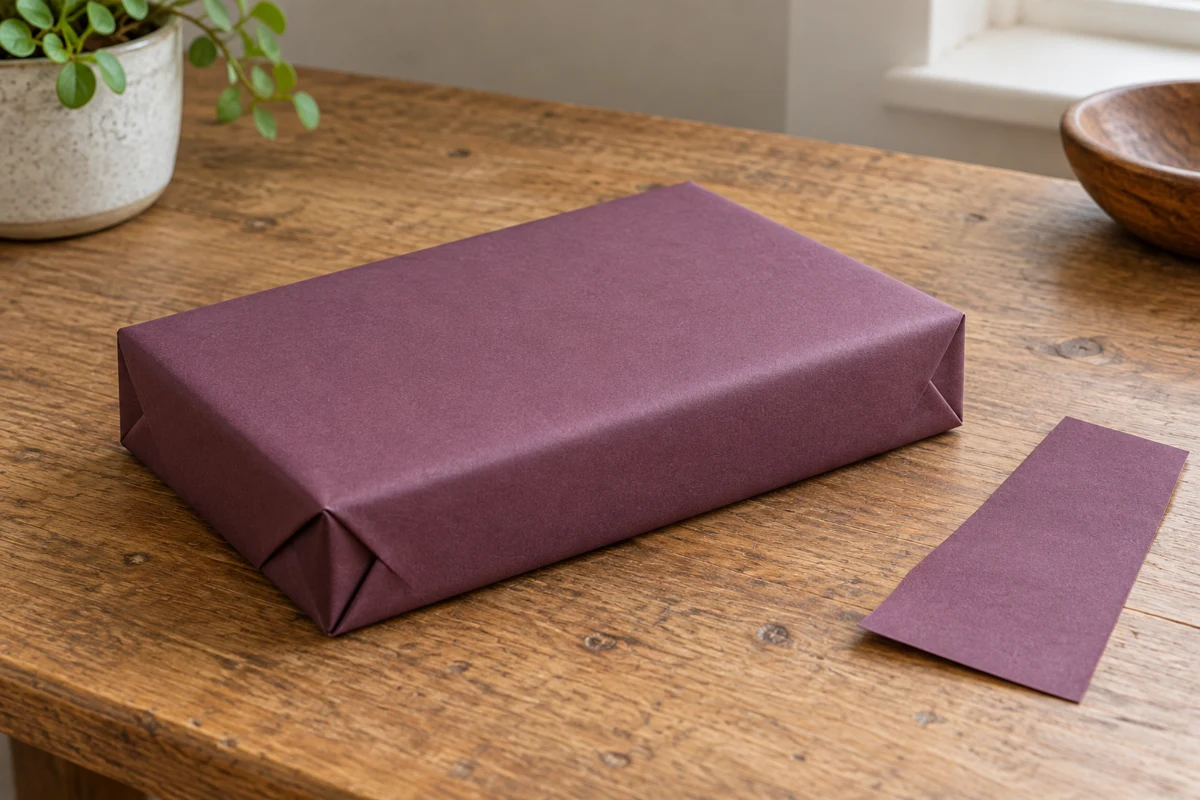
At one open end, push the two narrow paper sides inward first. This forms triangular flaps above and below. Smooth their diagonal edges with your fingers. Fold the lower flap up, then the upper flap over it, placing the open edge toward the back. Repeat at the other end.
If the folded area becomes very thick, there is probably too much paper. Open it and shorten the allowance instead of adding more tape over the bulk. A small piece at the final flap is enough when the folds sit properly. A paper band can hold the last closure if you want a wrapper that opens without tearing.
Check how the wrapped book handles
Lift the book and notice whether the wrapper pulls at its corners. A large hardcover needs more movement than a thin notebook. Tie any ribbon loosely enough that it does not press a groove into the paper and dust jacket. The wrapping does not support the weight, so hold the book underneath when handing it over.
A tag on top can finish a plain surface without adding another layer of wrapping. If the book will be mailed, put it in suitable shipping packaging with protection around the edges. Neat gift folds alone do not protect against impacts in transit. Save the successful paper dimensions if you are wrapping several identical books, but recheck when the cover thickness changes.