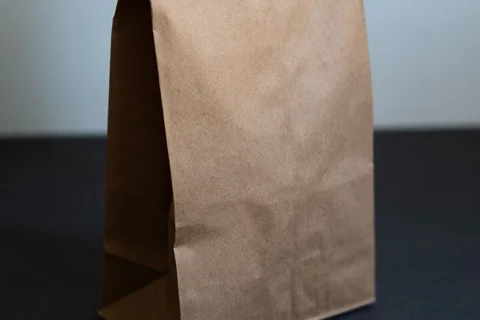
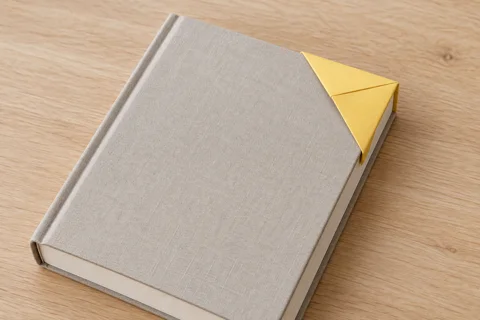
Sort paper offcuts for another project
A small collection you can see and use is more useful than a full box of unidentified scraps.

Sort by usable area
Spread the scraps on a table and first remove pieces with wet adhesive, grease or crumbling edges. Judge the actual clear area on each one. A large sheet full of cutouts may be less useful than a small clean rectangle. Existing printing is not automatically a problem, but it should suit the projects you are likely to make.
Create a few groups: larger areas for cards or wrapping, strips for bands, and small pieces for tags or collage. Sorting every color separately can become more work than using the paper, particularly in a small space. Keep delicate surfaces apart if they scratch easily or transfer color onto other sheets.
Give the collection a boundary
A flat folder keeps large scraps smooth. Smaller pieces can go in an envelope or shallow box whose contents are visible at a glance. Label the groups by likely use rather than simply writing “scrap paper.” That makes it clear where to look when a project begins.
Let the container size set a limit. When it fills, review the contents instead of automatically adding another box. Extremely narrow snippets with no plausible use can go into the appropriate recycling stream where accepted. Keeping material helps only when you can find and use it later.
Visit the scraps before a fresh sheet
For a new card, pull out two or three suitable pieces before cutting into unused stock. Their existing dimensions can help shape the design. A smaller panel or a visible join may be more sensible than laboriously extending a scrap so it resembles a full sheet.
Store paper somewhere dry and away from direct sunlight. If its folding or bonding behavior is uncertain, note a successful test on the back. After a session, return only clean, usable pieces to the folder. Looking at the real available area keeps the collection from expanding while the pieces you actually want become buried. The aim is a supply that supports the next project, not a record of every cut you have ever made.