A folded corner bookmark
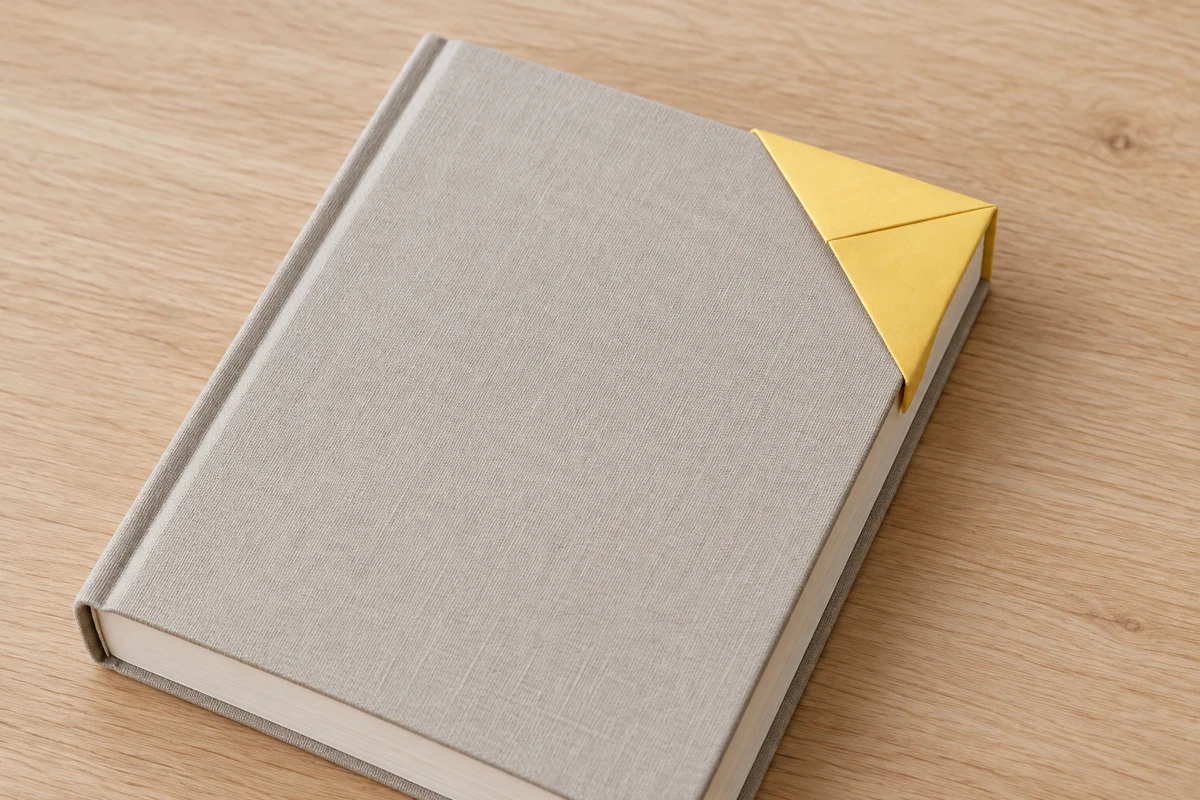
A folded pocket slips over a page corner without glue or bulky decoration.
Start with a true square
Use a square of paper about 6 inches, or 15 centimeters, on each side. Thin but reasonably strong paper folds more easily than heavy cardstock. Check that the corners are square: an uneven starting sheet tends to produce an awkward pocket opening. After one successful test, you can reduce the size for a smaller paperback.
Place the square with a point facing you. Bring the bottom point up to the top point to make a triangle, with its long folded edge at the bottom. Align the corners before pressing the crease. If the paper is printed on only one side, a quick trial will show which parts of that print remain visible in the finished bookmark.
Fold a pocket
Bring the left and right points of the triangle up to its top point, making a diamond. Open those two folds again. Fold only the front layer of the top point down to the midpoint of the long bottom edge. Leave the back layer standing. This folded flap becomes the front of the pocket.
Bring the left point upward again along its existing crease, then tuck it behind the front flap. Repeat with the right point. Flatten both tucked sections gently. The open edge of the pocket now faces downward. Try slipping a single page corner inside without bending the page itself. The bookmark should sit comfortably rather than grip so tightly that you must force it on.
Keep the finished piece thin
The folds hold this bookmark together; extra adhesive is usually unnecessary and could transfer to a book page. If a point keeps escaping, reopen that last fold and check that it is tucked far enough into the pocket. A clean crease is more useful than a large spot of glue.
A drawing or a small flat paper accent can identify the front. Avoid beads, thick plastic eyes or heavy charms that press into pages when the book closes. For valuable or delicate books, an ordinary thin bookmark may be a gentler choice. Test the folded corner on an expendable notebook first, and replace it when its edges soften or begin to split.