Prepare fabric before cutting
Preparing fabric means considering its future care. Not every material belongs in the same wash load.
Work backward from the finished object
A cloth napkin is used differently from a framed fabric panel. First decide whether the finished piece will be washed regularly and what every component can tolerate. The main fabric is only part of that decision: interfacing, ribbon, and lining may impose different limits. Settle the combination before cutting so one layer does not later shrink independently of the others.
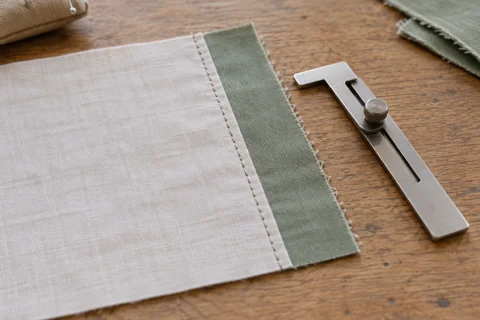
Read the available care information. A dry-clean-only material does not automatically become washable through a gentle machine cycle. For unidentified remnants, test a reasonably sized sample. Measure it in both directions and mark those distances inside the piece so fraying outer edges do not distort the comparison.
Observe color and dimensions separately
Wash and dry the sample only in a way permitted for the material and intended for the finished item. Treat strong or dark colors separately at first. A white companion cloth may reveal obvious dye transfer, but it does not prove permanent colorfastness. Check combinations of very light and dark fabrics before sewing them together.
Let the sample dry completely, then compare its marked measurements. Different changes in length and width show why one shrinkage percentage may not describe the whole piece. Note changes in feel as well. A fabric can soften or change surface texture even when its dimensions remain fairly similar.
Prepare the main length before cutting
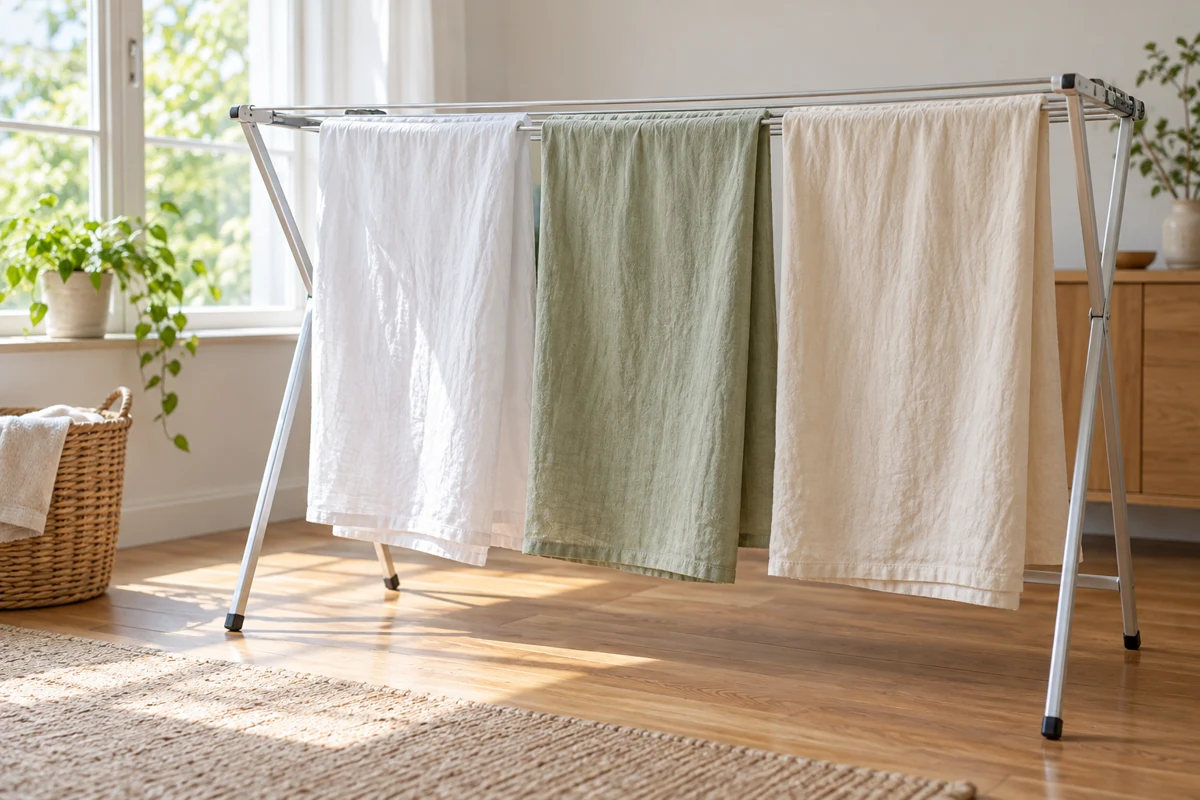
Finish raw edges that fray heavily before treating the larger piece. Avoid washing it with items likely to catch or snag it. Dry according to its care requirements, then let it lie relaxed. Smooth creases at a suitable temperature without pulling a distorted piece into an apparently square shape.
Cut the actual project only after this preparation. Keep a small remnant with its care information. Pretreatment reduces surprises but cannot guarantee that the fabric will never change again. When combining materials from different sources, sew two prepared scraps together and treat that sample once more. Check whether the join remains flat, especially for two-layer placemats or cushion covers whose faces could otherwise develop different tensions.