Find the grain before cutting
Woven fabric contains two thread directions. Their orientation affects how a cut piece behaves.
Start with the selvage
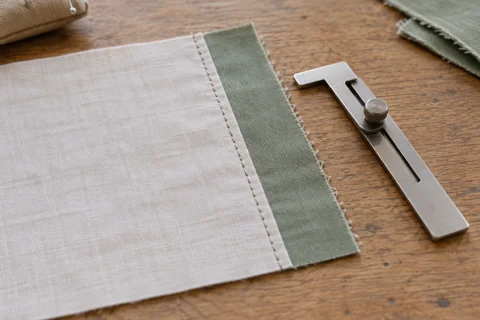
The firm lengthwise edge of a fabric length is its selvage. Warp threads run parallel to it, while weft threads run across. A pattern's grain arrow usually sits parallel to the selvage unless its instructions specify otherwise. Measure from both arrow ends to the selvage; equal distances are more reliable than judging the alignment by eye.
The selvage itself is usually left out of the main project area because it can be firmer and behave differently. Use it as a reference while allowing space beside it. A printed stripe may run slightly off the woven grain, so it is not automatically a replacement guide.
Work with the structure of a remnant
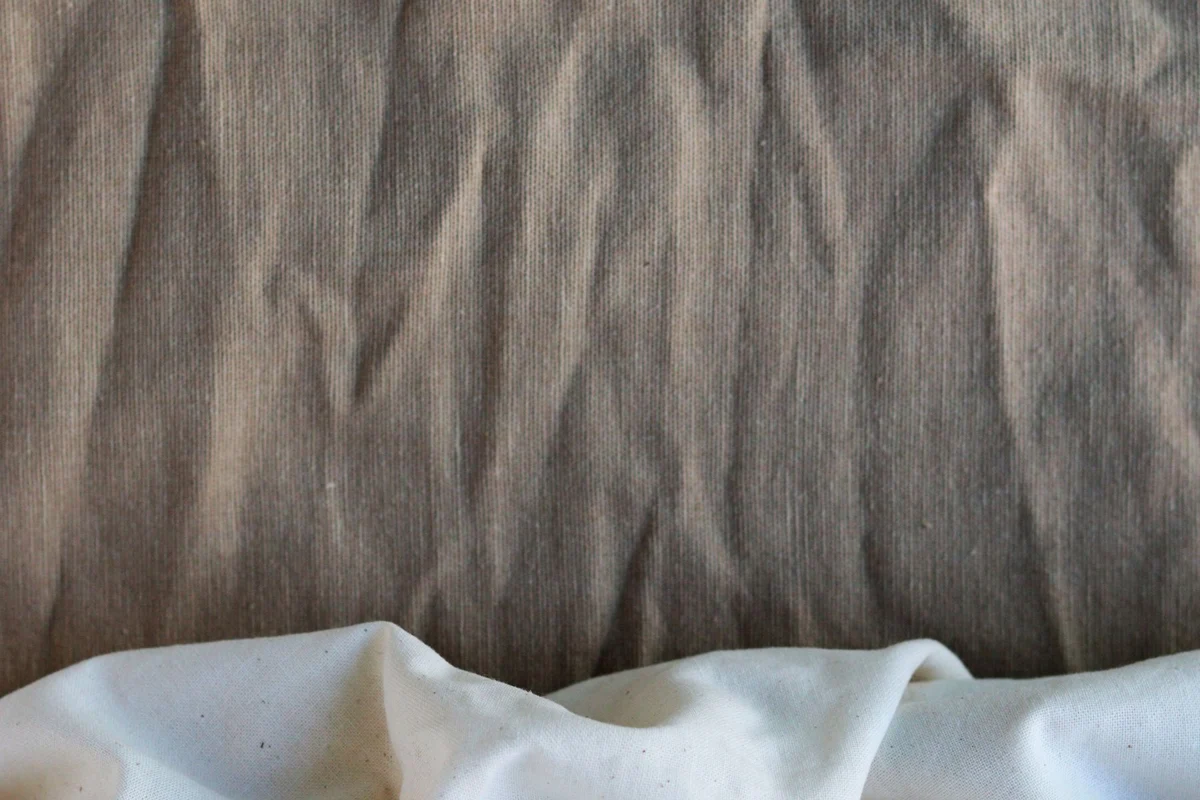
Inspect the weave in good light or with a magnifier. In a simple woven cloth, the threads form a right-angled grid. Follow one direction across the piece. Gentle stretching may reveal differences, but it is not a complete identification method, especially with blends or fabrics containing elastic fibers.
Try a small edge sample and compare a straight direction with a diagonal one. The diagonal often yields more readily. A flat tote panel or placemat generally does not need that extra movement. Orient matching pieces consistently rather than rotating them arbitrarily to save a tiny amount of material.
Check the print separately
After establishing the grain, consider motif direction. Two tote faces may both be correctly on grain yet look different because one was rotated 180 degrees. Mark top and bottom on the wrong side or pattern pieces. A pile fabric also has a surface direction that should not be confused with the grain itself.
Knitted materials such as jersey do not have woven warp and weft threads in this sense. Do not transfer every woven-fabric rule to them without checking. Stable cotton makes the structure easier to understand for small beginner projects. After cutting, place matching parts together without pulling. If their edges align only under tension, inspect the shape and direction again before a seam fixes that mismatch permanently.