Match a hand-sewing needle to fabric and thread
Eye, point and shaft all matter. A short sample seam shows whether a hand needle moves through the fabric without unnecessary resistance.
Do not choose by the number alone
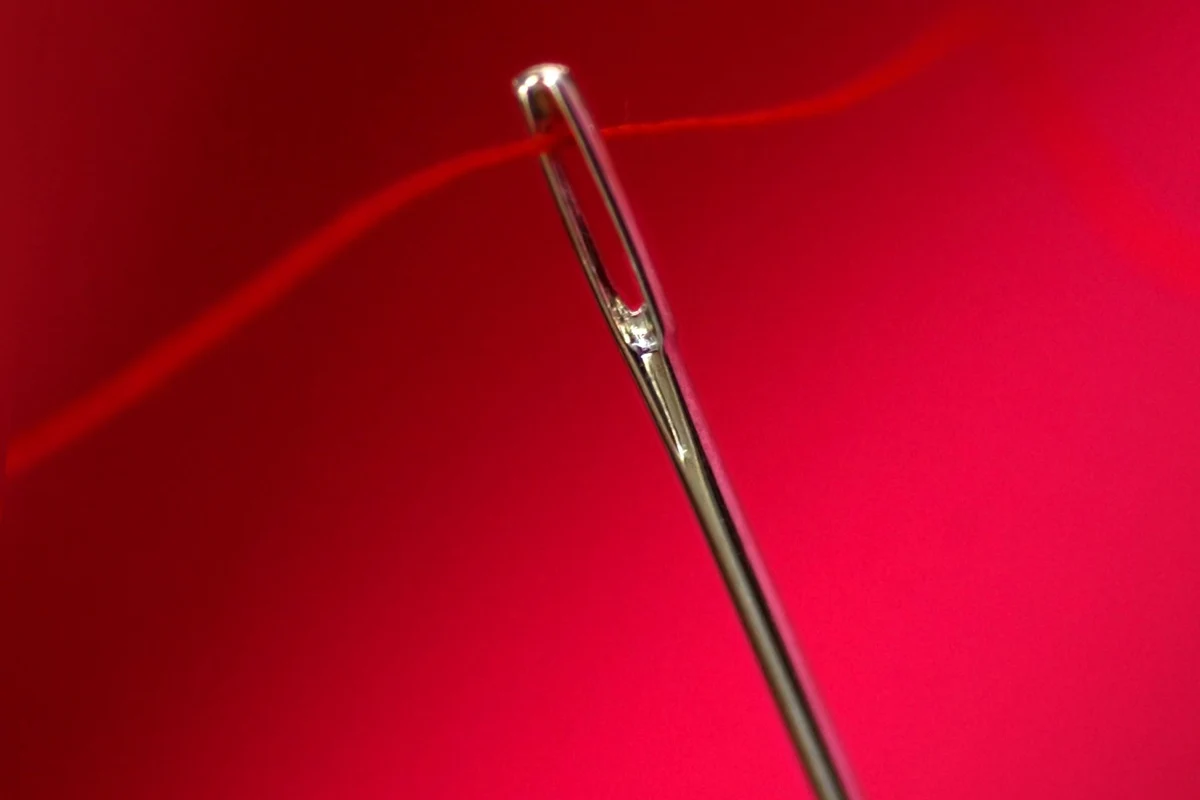
A needle package gives a size, but numbering systems across needle types are not interchangeable. In many hand-sewing ranges, a lower number indicates a larger needle. The particular range and manufacturer's guidance still matter. Compare point, length and eye rather than carrying a number from an unrelated project.
A sharp needle can pierce closely woven cloth. A blunt tapestry needle is intended for suitable open fabrics and counted work. Forcing it through dense cotton does not make the task gentler. Equally, not every project needs a sharp point.
Thread it, then sew a sample
The thread should fit through the eye without being crushed or split during threading. A larger eye may be easier to use, but the needle still has to suit the cloth. An unnecessarily thick shaft may leave visible holes in fine fabric.
Make several stitches through the same number of layers as the project. The needle should remain controllable. If pushing it through takes considerable force, reconsider the fabric, needle and thread combination. Pliers should not be the routine solution for every stitch.
Inspect both sides. Enlarged holes may come from an oversized needle or excessive thread tension. If thread frays at the eye, check for a rough spot and try an undamaged needle with a suitable opening.
Keep the small differences identifiable
Store needles by type so the appropriate one remains recognizable. A labeled needle book or original packet is more useful than a tin of several similar sizes mixed together. Account for the needles used in the project before clearing the work area.
Do not return a bent or rusty needle to the usable supply. A damaged point can roughen fibers unnecessarily. Collect discarded needles in a suitable puncture-resistant container rather than leaving them loose in household waste.
A small project usually needs only a few deliberately selected needles. A large assortment helps only if you can identify the differences. Record a successful fabric, thread and needle combination with the pattern. The next project can then begin with a useful reference instead of another search through an anonymous collection.