A soft sleeve for reading glasses
A soft sleeve reduces light rubbing but does not replace a rigid case that protects glasses from pressure.
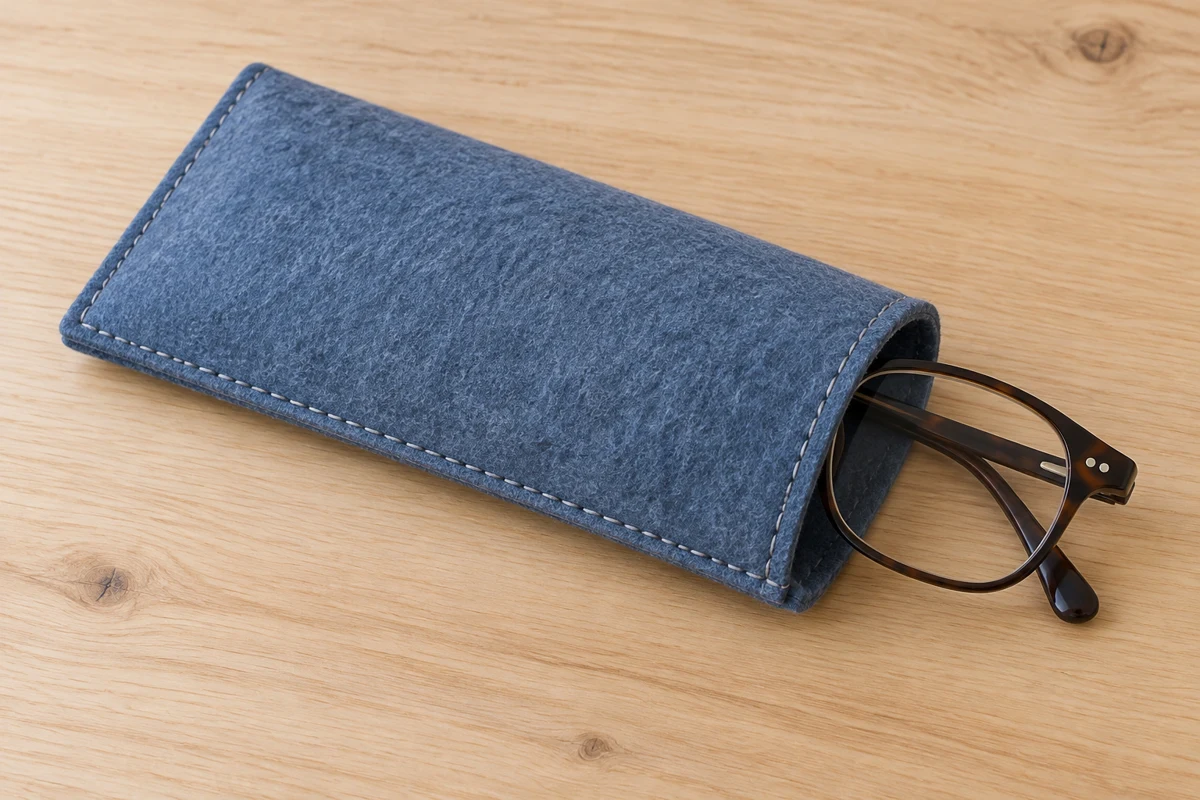
Let the folded glasses determine the pattern
Place the folded glasses on paper and wrap it loosely around them. Mark a rectangular sleeve that allows the glasses to slide in without force. Their thickness matters as much as their width. A flat outline often produces an undersized pocket because the fabric must also travel around the folded temples.
Transfer the paper mock-up to inexpensive fabric. Include a 1 cm seam allowance and the planned finish at the opening. An interior width of 9 cm, about 3½ inches, may suit one frame and be too narrow for another. That is why this project starts with a fitting exercise instead of one universal cutting measurement.
Test the opening on the paper mock-up
Close the paper model fully and slide the glasses in and out several times. A temple can flare outward during insertion even when the folded frame looks compact on the table. Allow movement room. The opening should not be so deep that retrieving the frame requires pressing on the lenses.
Mark where the glasses finish inside. Leave a modest space before the bottom seam. An excessively long sleeve hides the frame, while a short one leaves vulnerable parts exposed. If adding a flap, keep its attachment outside the lens-contact area. Hard buttons or snaps require separate consideration and are unnecessary for this simple soft sleeve.
Keep the inside smooth
Choose a clean, smooth lining without rough seams or hard embellishments. Check it for loose fibers before use. A light outer fabric with suitable thin interfacing may provide enough body. Thick padding reduces the space inside and must be included in the trial sleeve rather than added after sizing it.
Cut two matching rectangles for the outer shell and two for the lining. Sew the shell sides and bottom right sides together. Assemble the lining similarly, leaving a turning gap in its bottom seam. Keep both top edges open. If a softly curved lower seam suits the glasses better, there is no need to force sharp rectangular corners.
Join the opening without an exposed allowance
Turn the shell right side out and place it inside the wrong-side-out lining so the right sides touch. Sew around the upper opening. Pull the sleeve through the lining's bottom gap, then close that gap flat with small hand stitches. Push the lining inside and arrange the rim so no rough allowance protrudes toward the lenses.
Try the sleeve with clean hands, without pressing hard on the glasses. They should slide in easily and remain accessible at the opening. Stretching an undersized sleeve forcefully is not a good solution around delicate temples. Use a rigid case inside a tightly packed bag. When the fabric sleeve needs cleaning, follow the materials' care instructions and let it dry fully before use so moisture and grit do not remain against the lenses.