Sort fabric scraps by usable size
Sort fabric scraps by usable area and behavior, not only by attractive colors.
Look at the real piece
Open a scrap fully and smooth it by hand. A folded piece often seems larger than it will be after removing old seams and damaged areas. Mark holes, thin spots and stains unsuitable for the next project. Do not immediately square everything off; an irregular shape may fit a pocket or small patchwork piece well.
Separate stretchy knits from stable woven fabrics because they behave differently under stitching and pressing. Keep very heavy material apart too, so it does not hide delicate pieces. Color-only sorting can conceal these differences and encourage combinations that are awkward to sew together.
Use a few manageable size groups
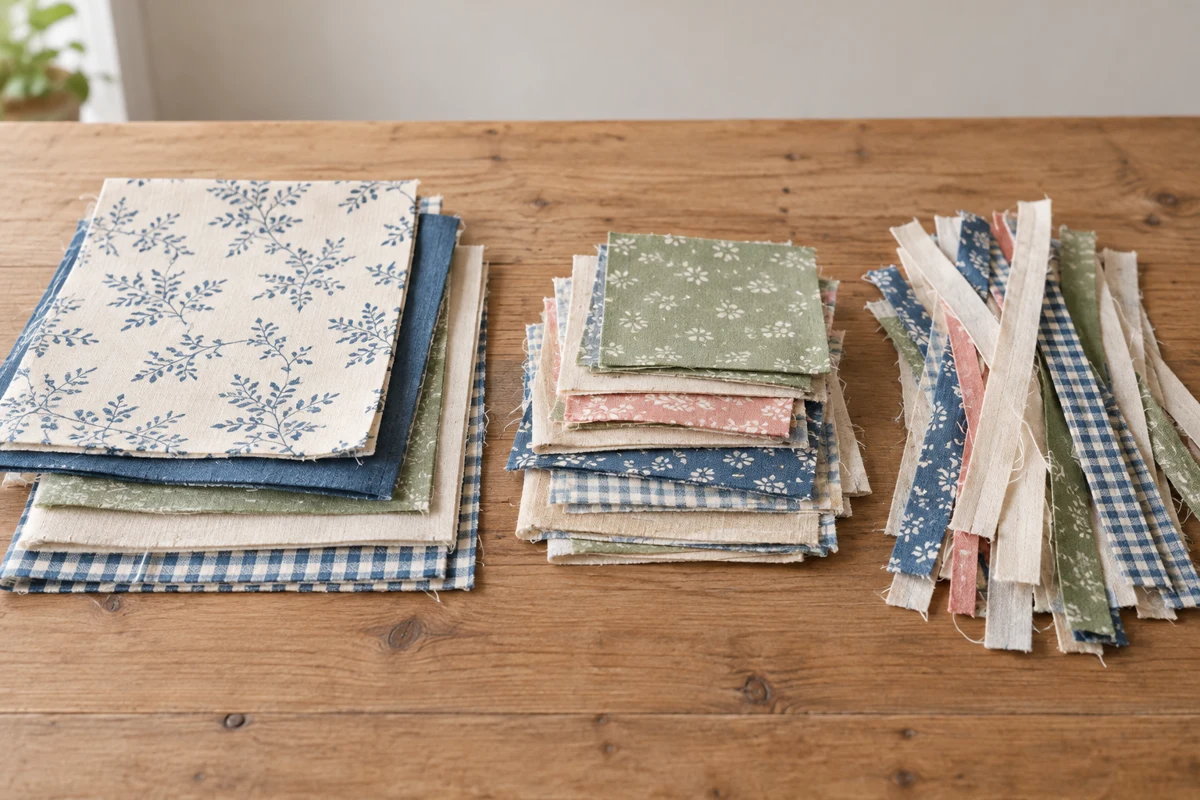
Keep larger areas for bags or linings. Broad strips can become bindings or pieced panels. Smaller pieces suit appliqué, repairs or test seams. Set the boundaries around projects you actually make rather than adopting a universal measurement for every household.
Wash used fabrics according to any available care information and let them dry completely. Keep uncertain materials separate until you decide whether they are suitable. A note recording known fiber content or former use prevents later guessing. You do not need risky identification experiments to decide that a scrap is not useful for your plans.
A small test-material section can be useful. Keep pieces that are no longer attractive enough for a visible panel but remain sound and have known properties. They can test stitch length, interfacing or a marking pen. Make this section deliberately smaller than the project supply. Otherwise every unsuitable scrap simply receives a new label and stays forever. Label a successful test with its settings afterward; the remaining offcut does not need to be kept merely from habit.
Store visibly and use the supply
Flat stacks or lightly filled clear containers reveal the available sizes better than tightly packed bags. Fold larger pieces with a representative area visible. Bundle strips loosely instead of deforming them with tight elastic bands.
Begin a small project by looking through this selection. If no scrap fits without elaborate additions, a fresh cut may be the better answer. Storage should make material useful rather than force every design around unsuitable leftovers. After sewing, return only clean pieces with enough area for another task. Tiny, heavily fraying snippets do not need to disappear among the useful fabrics again. Review the container when it becomes difficult to browse; expanding storage is not always the most useful next step.