Use and store fabric scissors
A fabric cutting test should feel controlled from the first bite to the tips. Size alone does not make a pair of shears suitable.
Start with the grip
A large pair of dressmaking shears can be useful, but only if you can open, close and guide them comfortably. Your fingers should not feel pinched in the handles. Handedness matters too: the blade arrangement affects both the cutting action and your view of the line. Symmetrical plastic handles do not necessarily make a pair equally suitable for right- and left-handed use.
Try the movement without fabric first. The blades should close smoothly without making you twist your wrist. Long blades help with broad, straight cuts. Smaller scissors may be easier to control around a tight curve or into a little corner. There is no requirement for one tool to do every cutting job.
Use the actual fabric as your test
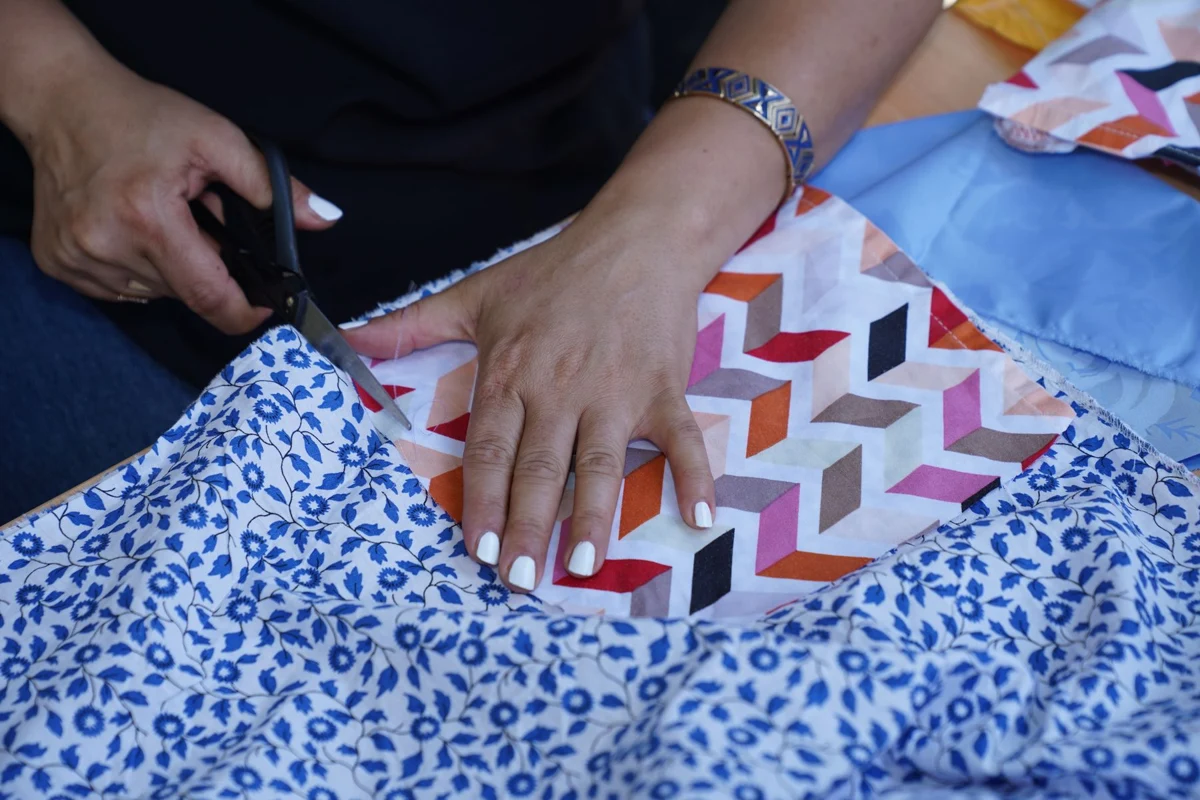
Lay a project offcut flat on the table. Cut a straight line, then a broad curve. Notice whether the tips complete the cut or simply trap the cloth between them. Folded fibers, pulled threads and shifting layers can indicate dull or unsuitable blades, but lifting the fabric while cutting can cause trouble too.
Keep the lower blade close to the work surface rather than raising the entire piece into the air. If you are cutting more than one layer, check that all the layers remain flat. Reduce the stack when an extra layer makes the action noticeably harder. Forcing the handles closed makes accuracy more difficult.
A fraying edge does not automatically mean your scissors are poor. Loosely woven cloth can shed threads after a clean cut. Look at the line itself: is it smooth and where you intended, or does it have torn-looking interruptions? Finishing a raw edge is a separate operation from cutting it accurately.
Make the distinction easy to remember
Reserve fabric shears for the materials their manufacturer specifies. Wire, stiff packaging and adhesive-covered tape need different tools. A small identifier on the handle can help everyone in a shared workspace recognize the fabric pair, provided it does not interfere with the grip.
Brush away loose fibers after use and store the scissors dry with the blades closed. Follow the maker's instructions for cleaning, lubrication and sharpening. Specialized edges are not all suitable for the same household sharpener. For a valued pair, a service familiar with sewing shears may be preferable to an improvised sharpening attempt.
Stop when a pin lies in the cutting path and remove it before continuing. Cutting over metal can damage the edge and cause an unexpected change in direction. The aim is an easy, controlled action. Extra pressure and speed should not be needed to persuade the tool through an ordinary fabric offcut.