Compare wool felt and craft felt
Craft felt is not a single fiber type. Compare composition, density and handling before choosing a sheet for a project.
Read beyond the name
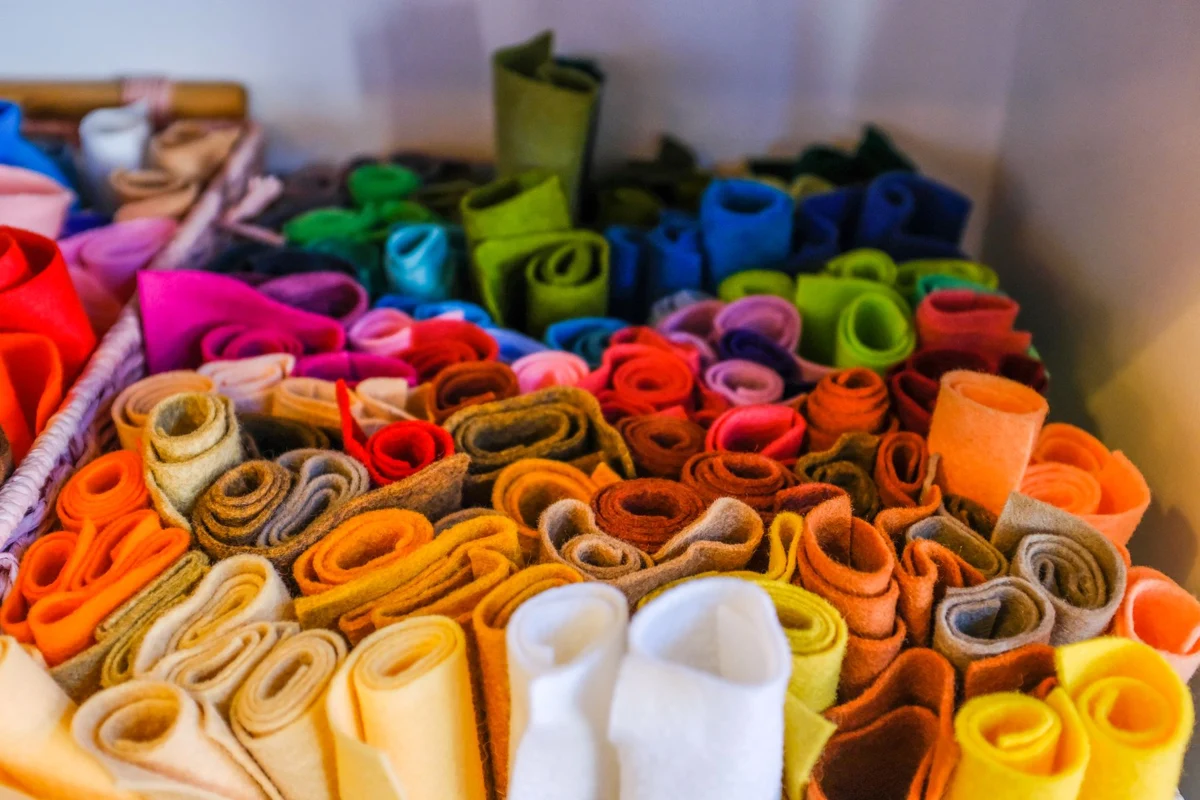
Felt sheets can look similar on a shelf: solid colors, a compact surface and no obvious woven structure. Yet craft felt may contain different synthetic fibers or blends. Wool felt can also vary in wool content and construction. Read the composition rather than inferring it from price or color.
A needle book needs material that accepts needles without immediately tearing. A decorative shape may need to hold a crisp outline. A coaster should lie flat and suit its intended use. None of those results follows automatically from the words wool or synthetic.
Thickness and density are different qualities
Two sheets of equal thickness can feel quite different. A loose sheet yields easily and may tear around stitch holes. Dense felt can hold its shape but be harder to sew by hand. Consider thickness together with density and the tool you plan to use.
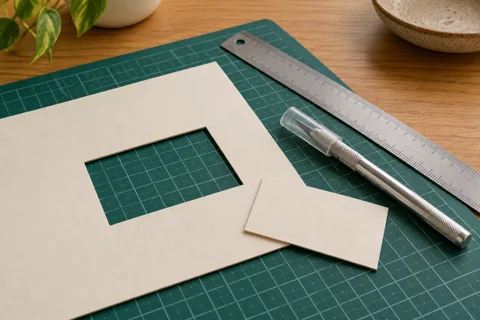
Cut a small corner and a narrow strip from an offcut. Notice whether the edge stays tidy or sheds many loose fibers. Bend the strip and release it. A soft needle book benefits from different handling qualities than a flat geometric ornament.
Make a few stitches using the intended thread. If the needle requires considerable force, the combination will be awkward. If the thread enlarges the holes, try less tension, different spacing or a denser felt.
Establish care before assembly
Follow the care instructions for the actual material. Wool felts do not all tolerate the same washing method, and synthetic blends vary too. A sample can show how an allowed cleaning method affects color, shape and surface before you use it on the finished object.
Do not assume heat resistance or fire performance from the apparent fiber alone. A decorative drink coaster is not a tested barrier for hot cookware. Adhesive, thread and additional layers also affect the completed item.
Keep the label or a short material note when buying. Anonymous offcuts are difficult to reorder accurately later. For a matching set, allow enough of the same stock at the outset; color, density and thickness may differ substantially between products. Comparing a new sheet against a saved physical sample is more dependable than relying on the name of a shade.