Choose sandpaper for small craft work
A rough wooden edge does not automatically need the coarsest abrasive. Let the surface condition determine the starting point.
Identify what needs removing
A small wooden blank may only need a slightly rough edge made comfortable to touch. That does not call for aggressive removal. A deeply uneven cut surface is a different problem. Name the defect first: loose fibers, tool marks or an entire edge that is out of square.
Sandpaper does not replace accurate shaping. Prolonged sanding on a visibly crooked cut can change the dimensions without reliably correcting the angle. For an uncomplicated craft project, a better-cut blank may be the more sensible starting point.
Treat grit as a guide
Within the same grading system, lower numbers generally indicate a coarser abrasive and higher numbers a finer one. Check the marking system and product guidance rather than assuming numbers from different systems are interchangeable. The abrasive also needs to suit the material.
Try an offcut with a comparable surface. Start no coarser than necessary. Deep scratches made by a coarse abrasive must be removed in later stages. Very fine paper may not do that efficiently; an appropriate progression is more useful than a large jump.
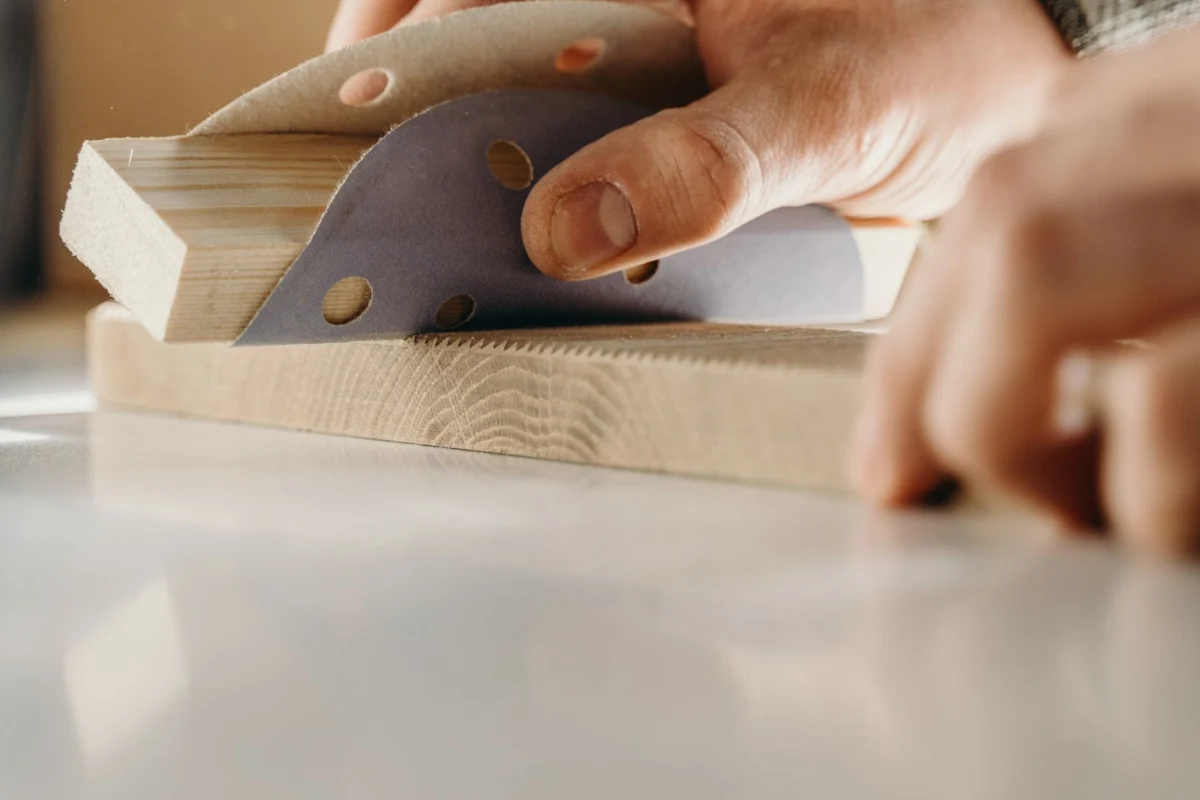
A small sanding block supports a flat face more evenly than fingertips alone. At an edge, decide whether you are merely removing roughness or deliberately rounding it. Repeated uncontrolled passes over one corner can round it more than the others.
Keep the material's behavior in mind
For ordinary known solid wood, finish smoothing in the direction of the grain. Cross-grain scratches may remain visible beneath a later finish. Avoid pressure that clogs the abrasive or changes the shape of the edge.
Remove dust using a method appropriate to the material, then inspect again. Dust can hide shallow depressions. Follow the protective equipment and ventilation guidance for the material and abrasive; keep dust away from eyes and breathing space.
Do not casually sand unknown old paints, coatings or treated wood. Establish their suitability and any hazardous constituents first. Wet sanding is not a universal alternative either: the abrasive, substrate and planned finish must all allow it.
Save partly used pieces with their grit marking intact. A small offcut may still suit a corner if it is neither clogged nor torn. When you need much more pressure to get any effect, inspect the paper. Rubbing harder does not restore a worn abrasive.