Prepare denim scraps for a sturdy pouch
Check denim scraps for wear, stretch and seam bulk before turning them into a small pouch.
Dark fabric is not necessarily strong
Lay the jeans flat and compare the knees, seat and lower legs. Dark fabric can still be thin, while a pale wash is not automatically weak. Hold areas against the light and pull gently in both directions. Mark places that give excessively or show small tears.
Read the fiber label if available. Stretch denim behaves differently from firm cotton denim when sewn. For a small pouch, choose front and back panels with similar stretch. One soft panel paired with a completely rigid one makes an even shape harder to achieve.
Place patterns away from thick seams
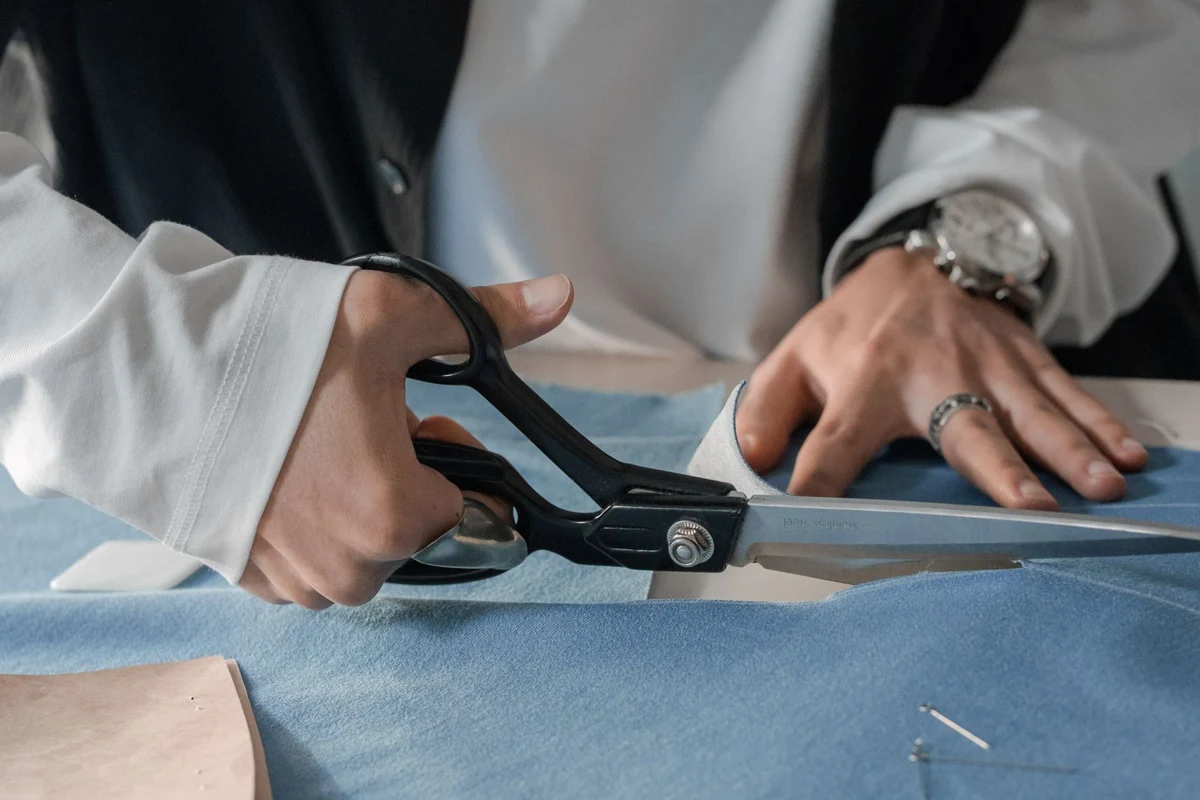
Open the legs along a suitable seam or cut just beside it. Arrange the planned pieces on the flat areas. Old flat-felled seams and hems are often bulky. Avoid placing them at a new seam intersection. An existing seam can remain as a visual detail when it does not end where several new layers meet.
Wash and dry according to available care instructions before final cutting. Press appropriately for the fabric. Cut matching front and back panels after this preparation. An old garment edge is not a reliable reference for a square corner.
Test the actual layer stack
Build a sample with the same number of layers that will occur at the edge or zipper. Use a denim-suitable needle and compatible thread, choosing size according to the fabric and machine guidance. SCHMETZ describes a reinforced blade for its jeans needles, but a suitable needle does not remove a machine's limits.
Sew slowly and guide without pulling. Stop if stitches skip or feeding stalls at a thick transition. Reduce the layers, move the seam or change the construction. Repeatedly sewing over the same troublesome spot can further damage the fabric or needle.
Treat the scrap as material, not a ready solution
A lighter lining can make the interior smoother, but adds layers too. Include it in the plan before sewing. Flat outer panels and a few simple seams may be enough for a small pouch; an elaborate boxed base is not essential.
Keep narrow denim offcuts for future stitch tests. Record the successful needle, thread and layer combination instead of trying to reconstruct it from memory. If the finished edge later develops torn needle holes, denser stitching is not always the answer. The used fabric may already have been weak there and need replacement. Checking that possibility prevents a series of increasingly heavy repairs on a panel that cannot support them.