Assess curtain fabric for another project
Inspect a curtain's reverse, light damage and care label before treating it as ordinary project fabric.
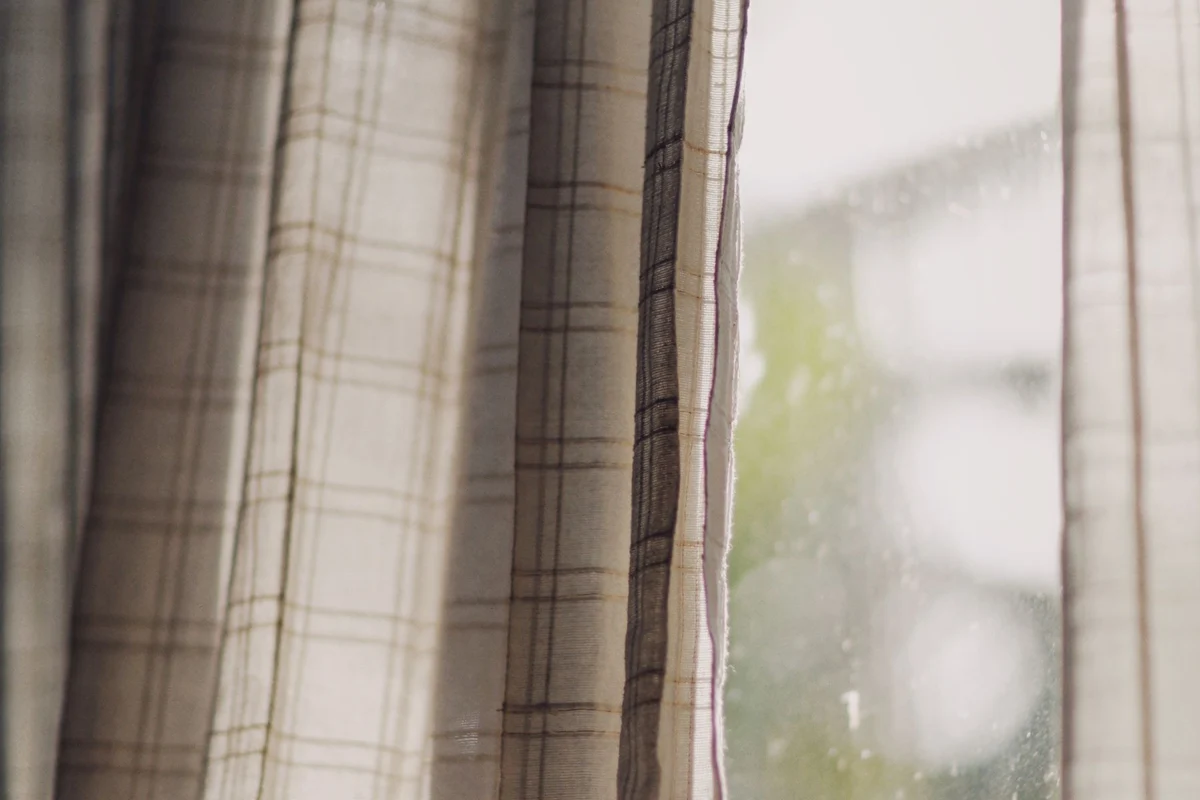
Look at both faces
Remove hooks, rings and weights where they can be taken out safely. Spread the curtain and inspect front and back. The window-facing surface may be faded or brittle. Compare suspect areas gently with a protected edge rather than pulling hard on weakened fabric.
Some curtains have several layers or a coating. A backing that flakes, becomes sticky or crumbles when moved is unsuitable for an ordinary sewing project. Adding a lining does not fix the material beneath it. Do not attempt to remove unidentified technical coatings by sanding, heating or experimenting with solvents.
Resolve cleaning before cutting
Read the label and clean only as directed. Heavy decorative fabric is not necessarily machine washable. If its care remains unclear, do not choose a project that needs frequent washing. Strong odors or visible mold are not problems solved by creatively reusing the fabric indoors.
After cleaning, dry it completely and smooth it appropriately for the material. Measure afterward. Old hems may conceal useful extra fabric but can leave permanent fold lines or color differences. Open a short section before unpicking every seam.
Consider weight and pattern at the new scale
A large print looks different on a small pouch than across a window. Place paper shapes on the fabric to judge the visible crop. Heavy cloth can become excessively bulky at small corners. It may suit a flat decorative panel better than a construction with many turned edges.
Test the eventual layer stack with appropriate stitching and consult the machine guidance. Remove remaining heading tape or weights rather than accidentally enclosing them in the new item. Keep known care information with the usable panels. Curtain remnants are not automatically suitable for children's products, hot objects or loaded straps. Choose a new purpose whose demands you can actually assess in the existing material. That choice matters more than obtaining the largest possible number of pieces from one curtain.
Before final cutting, inspect the pattern repeat. If one large motif appears only once in the usable panel, avoid losing it accidentally in a seam allowance. Cut a paper window showing the finished visible area and move it over the cloth. This isolates the eventual crop from its surroundings. Plan both faces together if both will show. A remnant may provide one deliberately chosen front even when two matching panels are impossible; that can be a design decision rather than a defect.