Choose clips or pins to hold pieces
Clips grip an edge; pins can hold the middle of a panel. Choose according to the fabric and what happens next.
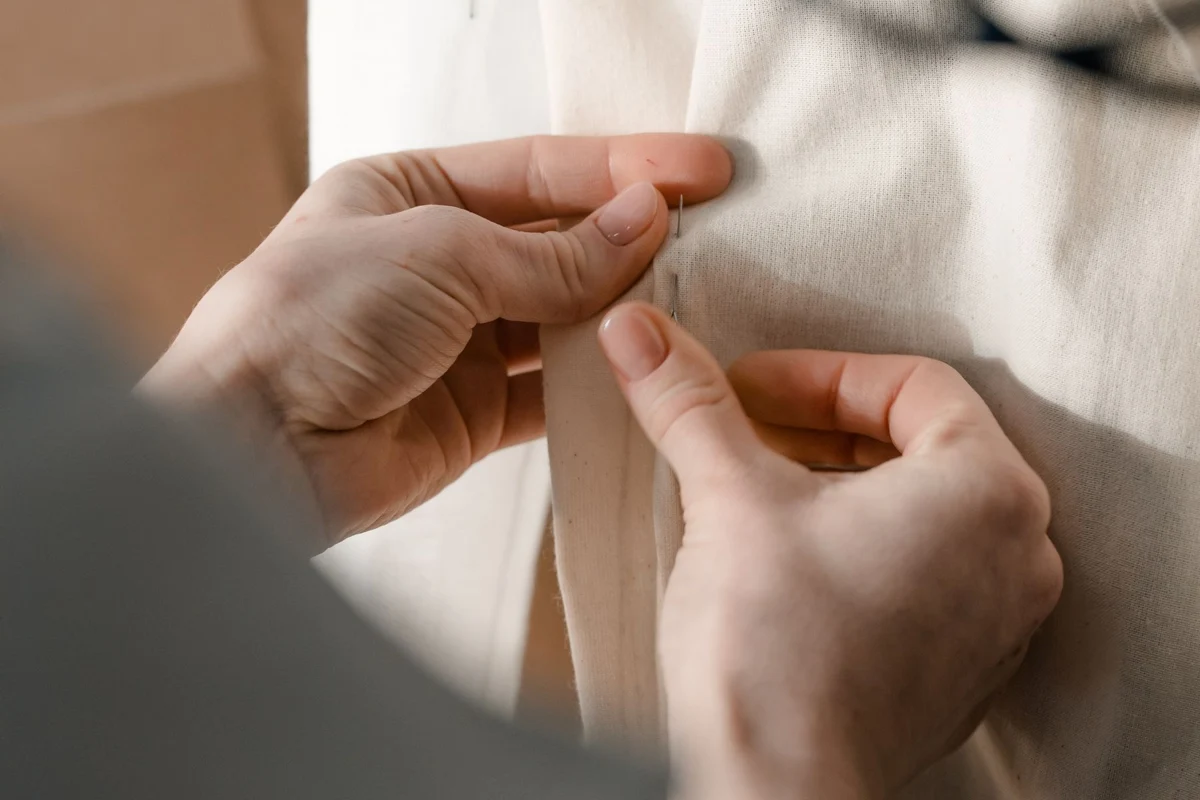
Locate the place that needs holding
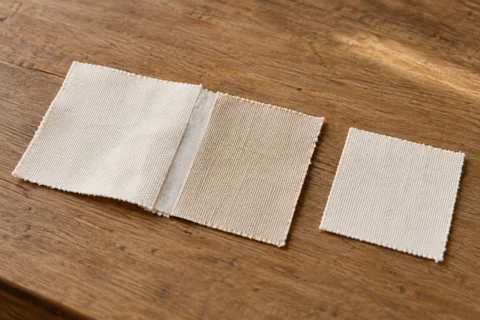
Two felt layers meet edge to edge. Small sewing clips can hold them conveniently without piercing the surface. A patch pocket may need its center secured to the middle of a panel, where a clip reaching from the edge cannot help.
Pins and clips therefore do not perform exactly the same job. Decide whether the pieces only need to stay together until sewing or must also be moved, turned or pressed. The fastening should not obstruct that next step.
Pins can leave permanent holes in coated fabrics. Test a scrap and, where appropriate, keep punctures inside a seam allowance that will be hidden. Clips can leave pressure marks of their own, so they are not automatically harmless on every delicate surface.
Start with the important points
Align the ends and key matching marks first. Secure those, then add enough fastenings to keep the edges calm. Too many pins make a small piece cluttered; too few allow long edges to creep apart.
Look at the underside before sewing. A clip may have caught only the upper layer, or a pin may have trapped a fold below. A smooth-looking face does not reveal every mistake.
Remove pins and clips before they reach a presser foot, machine needle or cutting blade. Do not intentionally sew over pins. During hand sewing, avoid leaving the next pin exactly where your fingers need to grip. A small dish beside the project gives removed fastenings a predictable home.
Check material guidance before pressing near fastenings. Plastic clips are generally removed first, and some pinheads are also heat-sensitive. Do not set an iron onto an unknown plastic component.
After the final seam, inspect every layer and remove the remaining fastenings. A forgotten pin inside a lining is easier to prevent when this check is treated as a separate step. Sort bent, rough or rusty pins out of the usable supply, and replace a clip with a sharp broken edge.
You may find that one project uses both methods: clips around a thick outer edge and pins for a concealed internal placement. There is no need to choose a single favorite tool for the entire construction when the two locations have different needs.