Organize thread on homemade cardboard bobbins
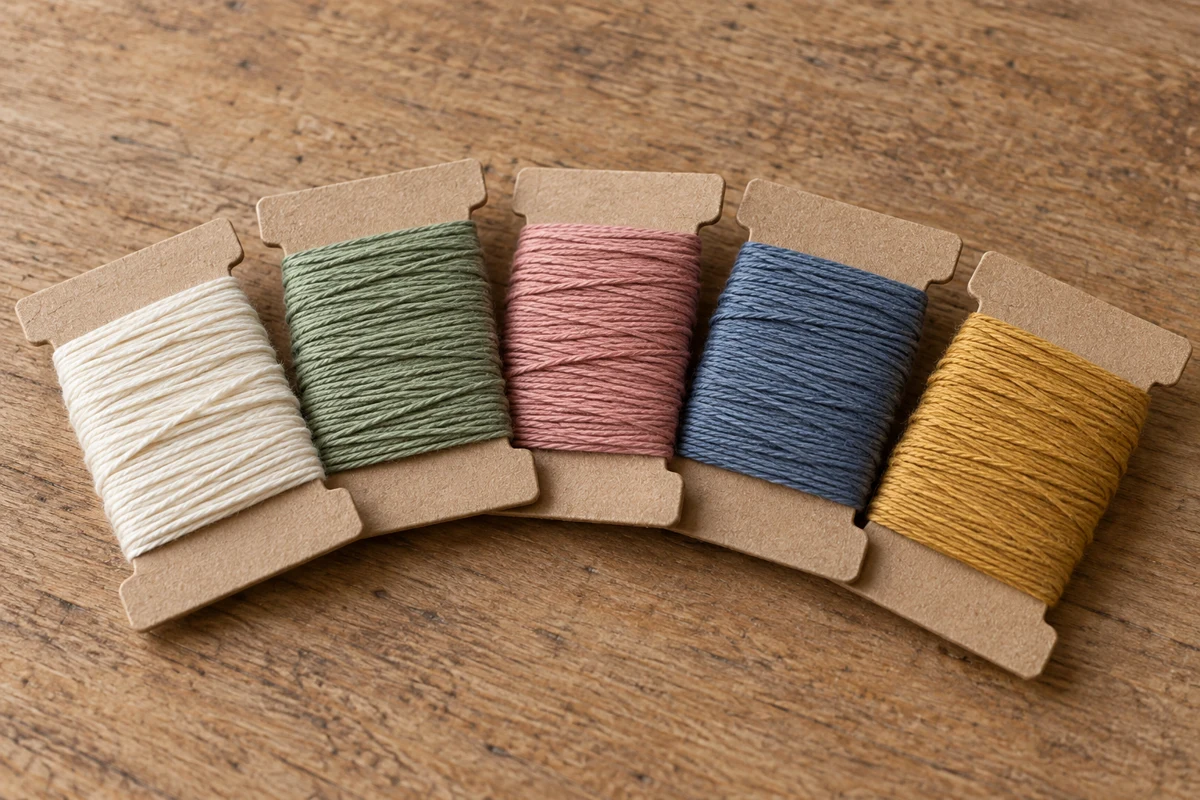
Small cardboard bobbins separate short thread leftovers without winding them under tension.
Size them for the thread you have
Spread out the leftovers and separate tiny ends from lengths you can use. A card around 1¼ by 2 inches works for small quantities. Round its corners so they do not press sharply into the thread. Firm, smooth cardstock is better than rough corrugated board with exposed edges.
Cut a small notch into each of two opposite short edges. These hold the beginning and end. A notch should grip lightly without trapping or cutting the fiber, so test with an expendable piece. For delicate embroidery floss, a broad shallow notch may be gentler than a narrow deep slit.
Different threads can use different card widths instead of forcing every type onto one size. Thick soft yarn needs more surface than a short length of fine floss. Put one wound sample in the intended box before making many blanks. You should be able to lift it with two fingers. If neighboring cards must come out first, the compartment is too crowded or the cards are too small for that storage method. Adjust the arrangement before committing to a batch.
Wind loosely in one direction
Place the starting end in the first notch and wind evenly around the middle. Do not pull tight. Tension can stretch elastic fibers and leave pronounced bends in others. Spread the turns across some width rather than building a thick mound in one place.
Secure the finishing end in the second notch. If the thread is too long for a reasonably flat card, use a larger spool or another storage method. Many thick layers hide the color and complicate unwinding. Keep machine-sewing thread on suitable original spools where possible; these cards are for short handwork leftovers.
Use the visible margin for information
Write the color, material or existing number before thread covers the whole card. If the origin is unknown, say so instead of guessing a number that will not help with a replacement purchase. Collect the cards in a shallow box by project or fiber type.
Store them dry and out of direct sunlight. Check for frayed notches when taking one out, replacing a damaged card before it roughens the thread. There is no need to save every tiny end. Keep lengths that can serve a foreseeable task, so the box remains a working supply rather than a record of unusable fragments. A few blank cards beside it make the next sorting session easier without requiring a large batch in advance.