Use a denim pocket as a small wall organizer
A salvaged denim pocket can hold lightweight notes when its surrounding fabric and support remain sound.
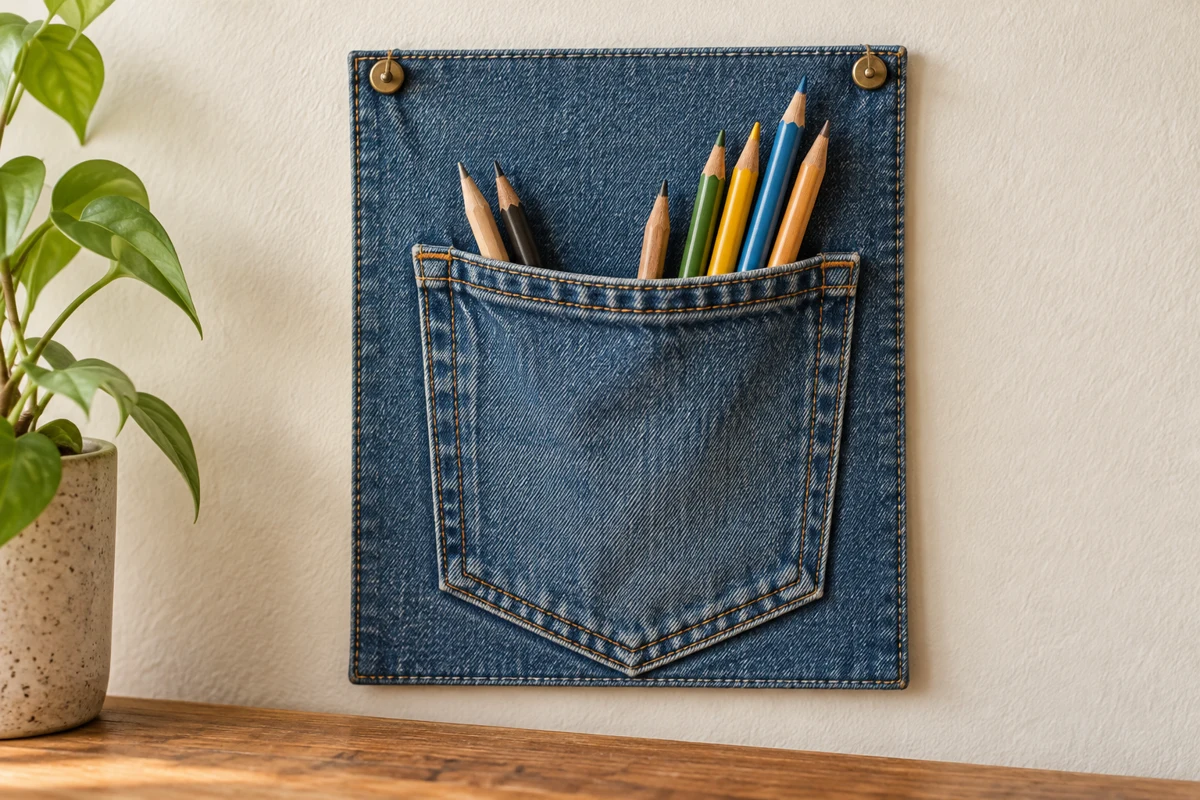
Keep fabric around the pocket
Do not cut directly along the pocket's outer edge. Leave a few inches of denim around it so the original attachment stays intact. Inspect the upper corners and stitching first; those areas may already be worn thin. Repair loose securing stitches before proceeding, or choose another pocket.
Wash according to the care instructions, dry and flatten the fabric. Plan around the actual contents. A small pocket can hold a few cards or a light pencil. It is not a substitute for a load-bearing wall organizer and should not carry glass or heavy tools.
Trim the surrounding panel into a rectangle or a deliberate irregular outline. Finish its raw edges with suitable stitching, or turn them backward if the thickness allows. A second fabric layer can cover the back. Make sure no finishing seam accidentally catches and closes the pocket opening.
Check hanging and access together
Attach the panel to a larger fabric backing or use a broad clamping rail that spreads the weight. One small pin through a frayed corner is not a reliable support. Wall attachment must suit the surface and actual weight; follow the instructions for the chosen mounting system.
Test the organizer low over a clear surface first. Add the intended light objects and remove them again. The pocket should not pull so far forward that its contents spill. If it sits too low or is awkward to open, adjust its position on the backing before hanging it permanently.
The old denim's faded areas can remain part of the design. Heavy charms and extra buttons are unnecessary and only add weight. Check the upper pocket corners occasionally for new tears. Remove the fabric from its hanging system for cleaning so neither the wall nor the hardware becomes damp. A modest load and accessible opening are more useful here than filling every available inch of the pocket.