Choose thread for small sewing projects
Thread needs to suit the seam, needle and care routine. A thicker thread is not automatically a better choice.
Let the seam define the job
A decorative line may be intended to stand out. A joining seam in a lightweight cushion cover usually needs to stay unobtrusive and flexible. Decide what the thread must do before selecting its color. Thick decorative thread may add unwanted bulk and may not fit the needle you already have.
A suitable general-purpose sewing thread can work for many small woven-fabric projects. The label does not mean every such thread covers every application. Check the fiber, recommended needle and care information. Stretch fabrics, heavy cloth and specialized decorative stitches may need a different combination.
Judge color one strand at a time
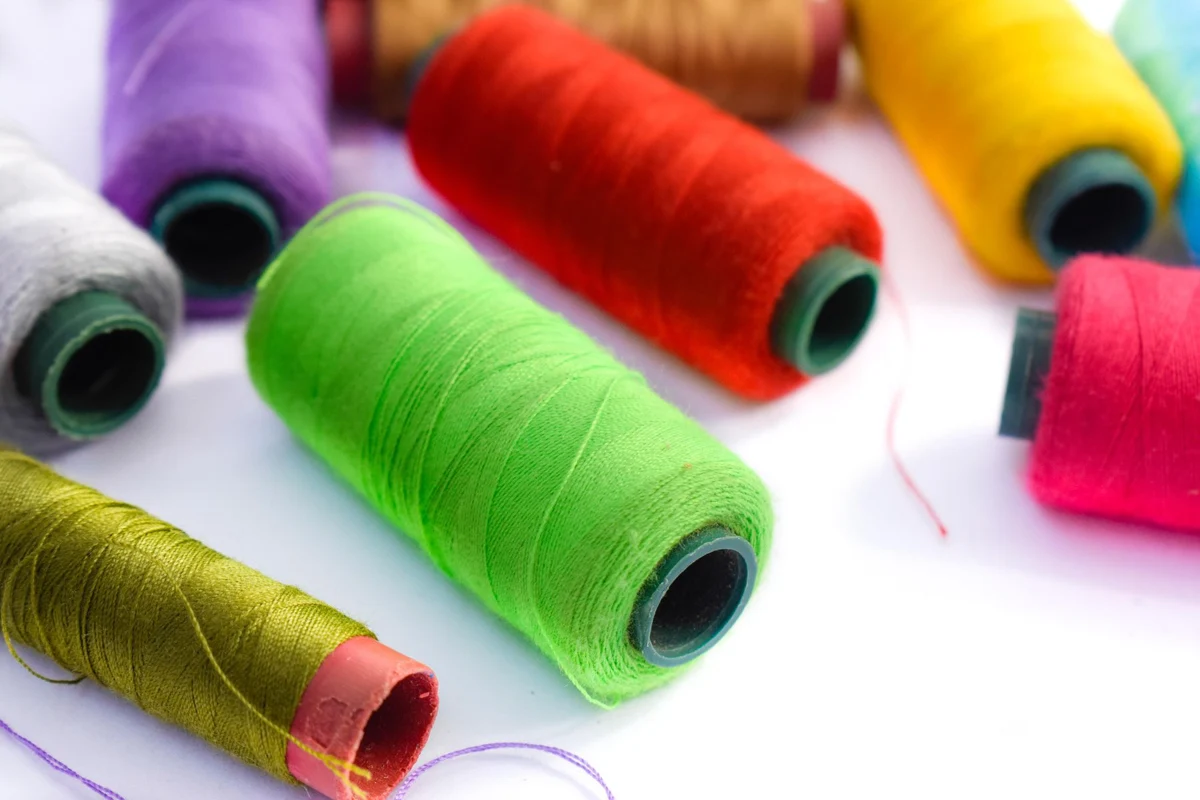
A whole spool looks more saturated than a single strand. Lay a short length over the actual fabric in good light. With patterned cloth, decide whether the seam should recede or create a deliberate line.
A close match is often uncomplicated for a hidden join. For visible stitching, make a sample at the intended spacing. A contrast that looks gentle on the spool can become dominant as a dense stitched line.
Record the color number while the label is available. Manufacturers use their own color systems, and a name such as sand or cream rarely identifies an exact replacement.
Test the thread with the needle
Thread the needle and pull it through a scrap. The strand should pass through the eye without immediately fraying. An undersized needle may stress the thread; an unnecessarily large one may leave conspicuous holes. Machine sewing also requires the correct needle system and appropriate settings.
Sew a short line through the same layers as the project. Inspect both faces and flex the seam. Puckering is not automatically the thread's fault: tension, stitch length and feeding also affect the result.
Check old thread of uncertain storage history before using it for an important joint. Visible damage, excessive fuzz or easy breakage are reasons not to use it for a stressed seam. A decorative use may still be possible, but that does not establish suitable seam strength.
Care for the finished object according to its most sensitive component. A thread that tolerates a high washing temperature does not make delicate cloth more robust. Store thread dry and protected, with its label where possible, so its identity and condition remain clear when the next project begins.