Save a shirt pocket for another project
Save a shirt pocket as a finished detail only if its fabric and folded edges are still sound.
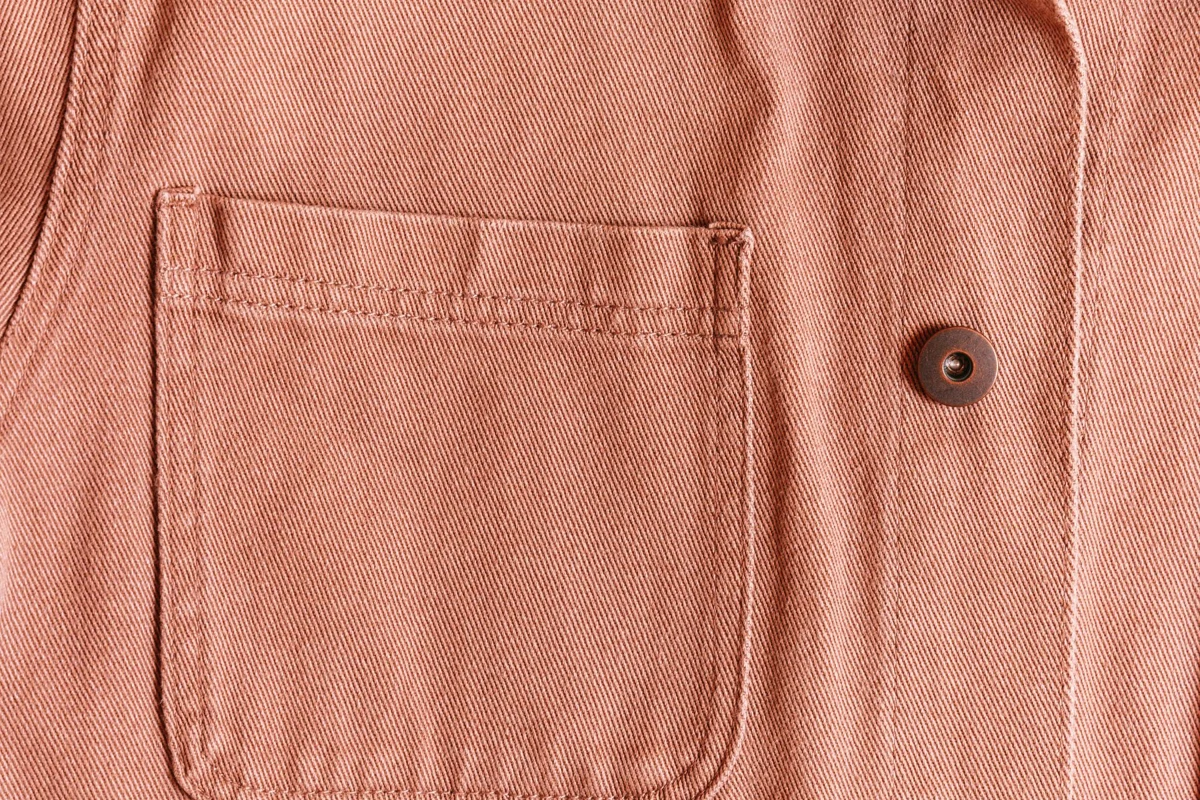
Inspect the pocket and its surroundings
Look at the shirt fabric around the pocket first. If it is worn thin, unpicking may reveal many small holes. An intact-looking pocket is not enough when its turned edges are already fraying. Wash the shirt according to its care label and dry it before making the final assessment.
Decide whether you need the pocket alone or a panel of shirt fabric around it. The second option may be simpler for a decorative fabric picture. For a new patch pocket, the original attachment seam must come out. Identify the top opening so you do not accidentally unpick its already finished hem.
Release the attachment gradually
Work from the back with a seam ripper, catching individual stitches. Cut a few threads and gently remove the loosened section. Do not pull the entire pocket away by force. The upper corners often contain several securing stitches that need separate attention.
Support the fabric flat and keep your fingers out of the tool's path. Improve the light or use magnification if the stitches are hard to distinguish. Remove remaining thread fragments with tweezers afterward. Aggressive brushing can roughen delicate shirt fabric.
Prepare it for the new project
Lay the pocket flat and inspect its turned edges. Press only at a setting appropriate for the fabric. Old needle holes may not disappear completely. Place the new seam where it securely catches the edge rather than simply following existing holes.
Pin the pocket to a test panel and check its position before attaching it to the final project. The opening should remain accessible and clear of a new hem. Reinforce the upper corners with additional stitches suited to the use. A thin salvaged shirt pocket is for light contents, not automatically a holder for heavy tools. If the test makes the fabric tear farther, use its shape as a pattern and make a replacement from suitable material instead.