Paint the outside of a terracotta pot
When painting terracotta, distinguish a decorative outer pot from a container planted directly with soil.
Choose a straightforward use
For this project, the painted pot is an indoor decorative cover. The plant stays in its own suitable nursery pot with an appropriate saucer. This arrangement makes the painted surface easier to keep dry. It does not guarantee that every coating will adhere permanently to porous terracotta; choose a product explicitly suitable for it.
Inspect for cracks, loose areas, and unknown old coatings. Paint cannot strengthen a damaged rim. Clean a used pot appropriately to remove soil and loose residue, then let it dry completely. A dry-looking outside does not necessarily describe the condition throughout a porous wall.
Select the paint and preparation together
Read the paint instructions for terracotta, primer, drying, and curing. A product intended for paper is not automatically suitable. Plaid's terracotta project, for example, uses a compatible multisurface paint. That match matters more than using whichever color happens to be in a craft drawer.
Test the combination on an inconspicuous area or sample. Check coverage and whether it rubs off after the specified period. If a primer is required, it is part of the coating system rather than something replaced by thicker paint. Do not assume food suitability or compatibility with direct soil contact without the relevant manufacturer information.
Mark the design on the dry pot
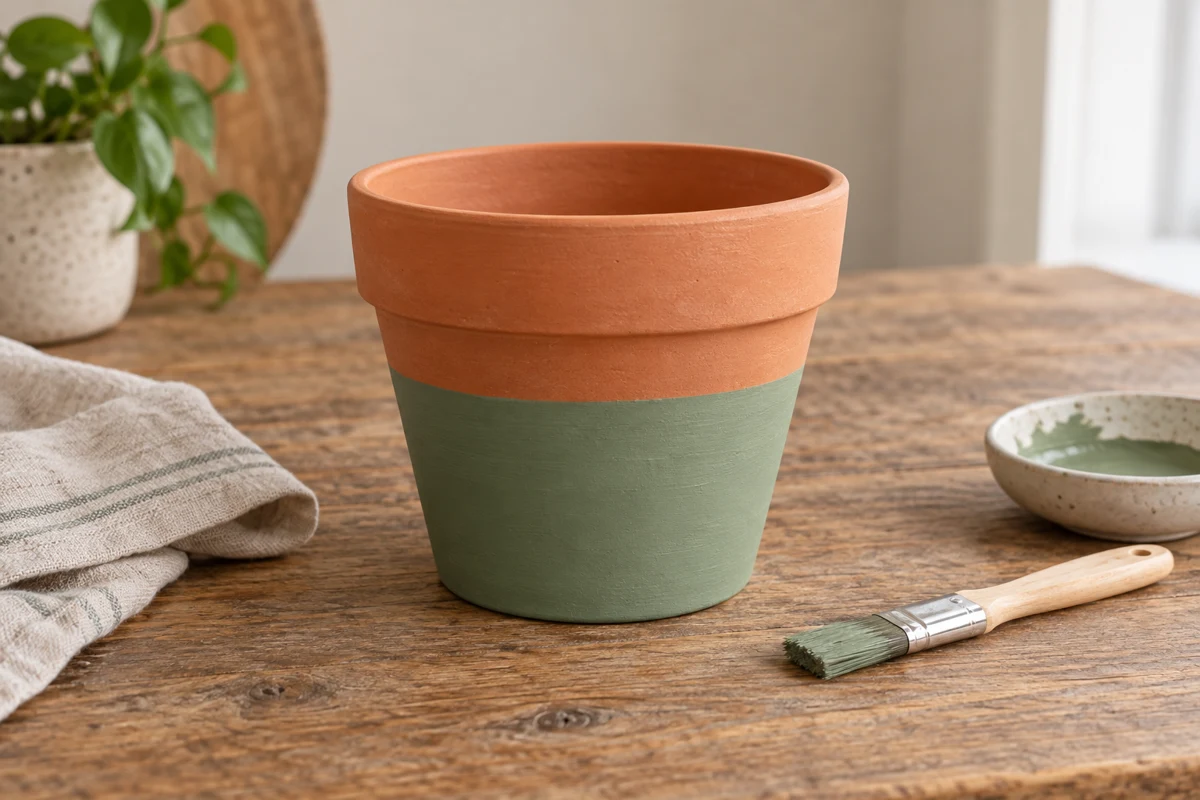
A broad stripe or limited color area is easier to manage than a fine all-over grid. Mark the desired height at several points and connect them as a guide. Tape behaves differently on a tapered pot than on a cylinder, so test its position before applying paint.
Build thin coats and let each dry as instructed. Support the pot without sticking a freshly painted area to the work surface. Leave drainage openings clear and avoid unnecessary coating inside. A brush of suitable width creates fewer stops and starts than filling a large area with a tiny brush.
Dry to touch is not always fully cured
A surface that can be touched may still be vulnerable to pressure or moisture. Observe the curing period before use or tight wrapping. Remove masking according to the paint and tape instructions without tearing at a partly lifted coating.
During use, check the base and underside occasionally. Water trapped between the inner and outer pots can affect the finish and reach furniture. Clean only as the coating permits. If paint peels, adding another layer without investigating is unlikely to solve the cause. Review moisture, surface preparation, and product compatibility before repainting.