Paint dried modeling clay
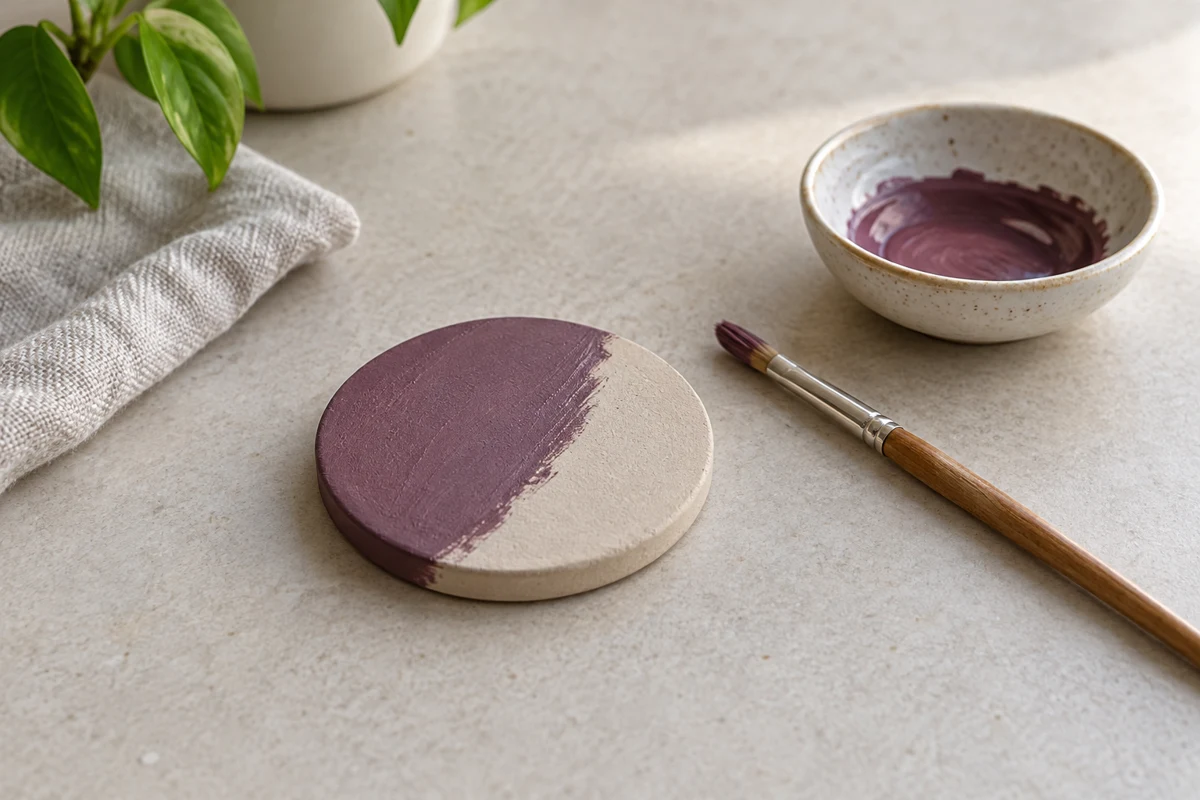
Paint may look different on dried modeling clay than it does on paper. A sample prevents surprises on the finished object.
Wait for complete drying
Follow the clay's drying instructions and include its thicker areas in that assessment. A pale surface is not always enough evidence. Crayola specifies thorough drying before decorating its air-dry clay. Painting over a damp center can conceal changes that would have been easier to address beforehand.
Remove loose particles with a soft brush. Do not automatically wipe with water if that might soften the material again. Small rough spots may be refined as the manufacturer permits, while avoiding unnecessary dust. A sample made from the same clay is the best place to test this preparation.
Build color in thin layers
Choose a paint compatible with the material and test coverage, adhesion, and color. An absorbent surface may make the first thin coat look uneven. Let it dry before deciding whether another is necessary. Heavy paint fills fine impressions and can emphasize brush marks.
On a small relief, apply the base color before working on recesses or raised edges. A nearly dry brush can highlight the high points, but try the amount of paint on the sample first. Excess paint quickly floods the recesses and changes the intended effect. Keep the underside clean when turning the piece instead of resting it on a freshly painted area.
A finish does not change the object's purpose
A compatible final coating may alter the appearance or make dusting easier. It does not automatically make craft clay waterproof, heat-resistant, or food-safe. Use combinations allowed by the manufacturers and follow their drying and curing times.
Inspect the piece in daylight. If only one corner has weak coverage, address that area rather than adding a heavy coat everywhere. Clean brushes according to the paint instructions and keep craft tools separate from kitchen utensils. Reserve the finished object for dry decorative use. A dish for keys or jewelry faces different demands from a drinking vessel, and attractive paint does not remove that distinction.