Use masking tape for cleaner paint edges
A clean paint edge depends on the surface, tape and application. Test adhesion before masking a delicate piece.
Match the tape to the surface
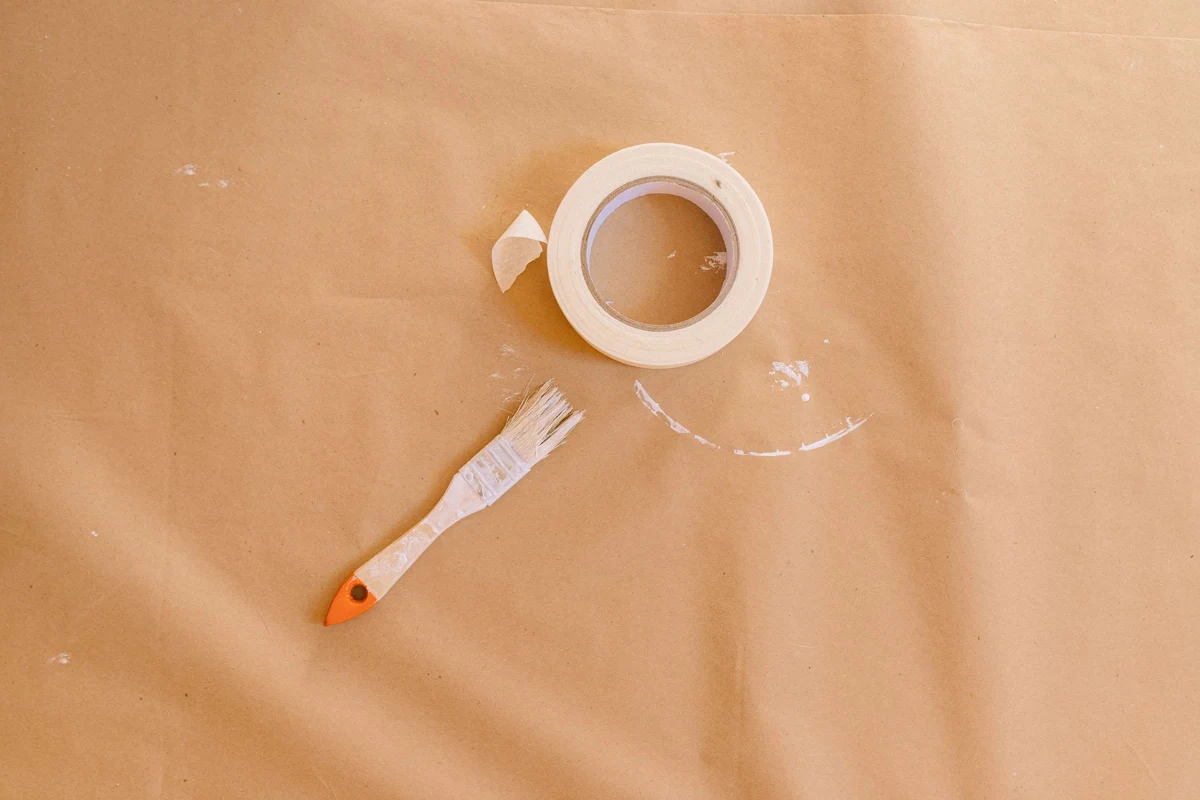
A strongly adhesive tape may be useful on a durable surface yet pull fibers from thin paper. Choose a product intended for the substrate. Tape color alone does not reliably indicate adhesion strength or how long it may remain in place.
Try a short strip on an offcut or a discreet equivalent area. Press it down as you plan to do on the project, then remove it after the intended interval. Look for lifted fibers, paint or coating. A test removed immediately does not necessarily predict what will happen after a longer painting session.
Establish a continuous edge
Prepare a clean, dry surface according to the product instructions. Dust and loose fibers create little paths beneath the edge. A highly textured surface may not produce a perfectly sharp line even with careful application.
Lay the tape along the mark without stretching it unnecessarily. Pulling it tight can change the line later. Press the working edge gently and evenly. On delicate paper, avoid enough pressure to polish or dent the face.
Apply controlled, thin coats of paint. A wet pool against the tape increases the chance of paint traveling underneath. Repeatedly pushing a heavily loaded brush into the same edge can also defeat careful masking. Follow the paint's requirements for additional coats.
Do not guess the removal interval
Remove the tape within its specified window and in accordance with the paint system. Some applications call for removal before the paint has fully hardened; others have different requirements. One universal waiting time does not suit every combination.
Pull slowly and steadily in the direction recommended for the product. If paper or paint begins to lift with it, stop rather than pulling harder. Use a scrap to investigate whether the technique, adhesive strength or surface is responsible.
Small bleeds may sometimes be corrected after drying, but extra work on delicate paper can enlarge the damage. A fresh small panel may be cleaner than several correction layers.
Keep the successful sample with the product details. Include the surface and how long the tape stayed in place. A note such as “yellow tape” is too vague for a future purchase; the product and its application together provide the information you can actually reuse.