When a material is no longer suitable for a project
A new use depends on condition, previous use and the demands of the next project.
Ask three questions before keeping it
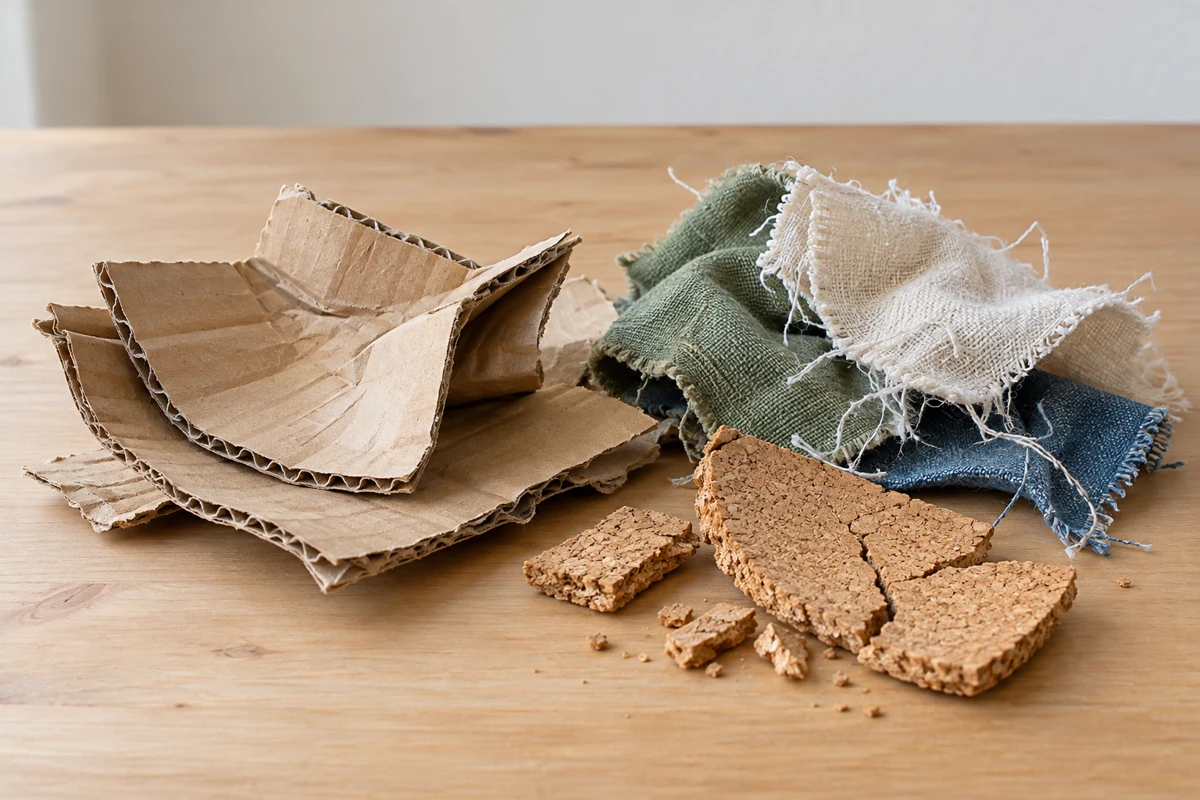
First, do you know what the material is and how it was used? A clean paper offcut from your own packaging differs from an unidentified workshop container. Second, is its surface intact? Third, what will the new job require? Something adequate for a dry decoration may be unsuitable for a loaded handle.
Separate doubtful pieces from sound supplies initially. This keeps loose particles, sticky residue and odors from spreading through the collection. Label the uncertainty if you plan to investigate later. Otherwise, you may keep an object while forgetting the reason it was set aside.
Do not merely cover damage
Cracked glass, sharp metal edges and crumbling coatings do not become sound foundations beneath paper, paint or fabric. Soft, water-damaged cardboard stays weak under a new cover. A project should not conceal these problems where they become harder to inspect.
On fabric, thin areas and enlarging needle holes suggest reduced strength. A patch may reinforce a limited area but cannot renew an exhausted textile everywhere. Test an expendable section with the intended seam. If the surrounding cloth keeps tearing, choose different material instead of adding more stitches.
Treat moisture and unknown residue seriously
Visible mold, persistent dampness or unidentified chemical contamination are unsuitable starting points for ordinary indoor crafts. A decorative sleeve removes neither the cause nor the residue. Do not strip uncertain coatings through heat, sanding or mixed cleaners. Appearance alone does not reliably establish composition or contamination.
Cleaning according to known care instructions can remove ordinary soil. If uncertainty about the surface or odor remains afterward, there is no obligation to reinterpret it as another project. Direct skin contact, food, heat and substantial loads particularly call for a clearly suitable foundation.
Recover a sound area or let it go
Sometimes damage is limited. A shirt may contain firm panels away from worn cuffs; a box with an unusable floor may have clean walls for templates. Recover those areas only when the damage is clearly bounded and the remaining material is clean. Identify weak old edges so they do not accidentally enter the new design.
When no sensible use remains, sort the item according to local disposal options. You do not have to rescue it by buying additional supplies. A sound decision may be to avoid turning an uncertain remnant into an object another person will later use without questioning its construction. Keeping fewer dependable materials can support better projects than preserving every possible scrap.