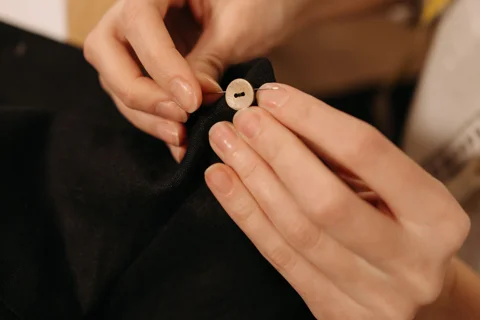
Backstitch for small repairs
Backstitch creates an almost continuous line and is useful for small hand-sewn joins in stable fabric.
Begin on sound cloth
Before repairing an open seam, inspect the material beside it. Thin or frayed cloth needs reinforcement; denser stitching alone cannot restore it. Practice on a folded cotton scrap with a marked seam line. Choose thread that passes comfortably through the fabric rather than one far thicker than the hole made by the needle.
Secure the beginning with a small knot or discreet stitches. Keep the layers flat together, basting first if they repeatedly shift. A short trial reveals tension problems sooner than a long seam inspected only at the end.
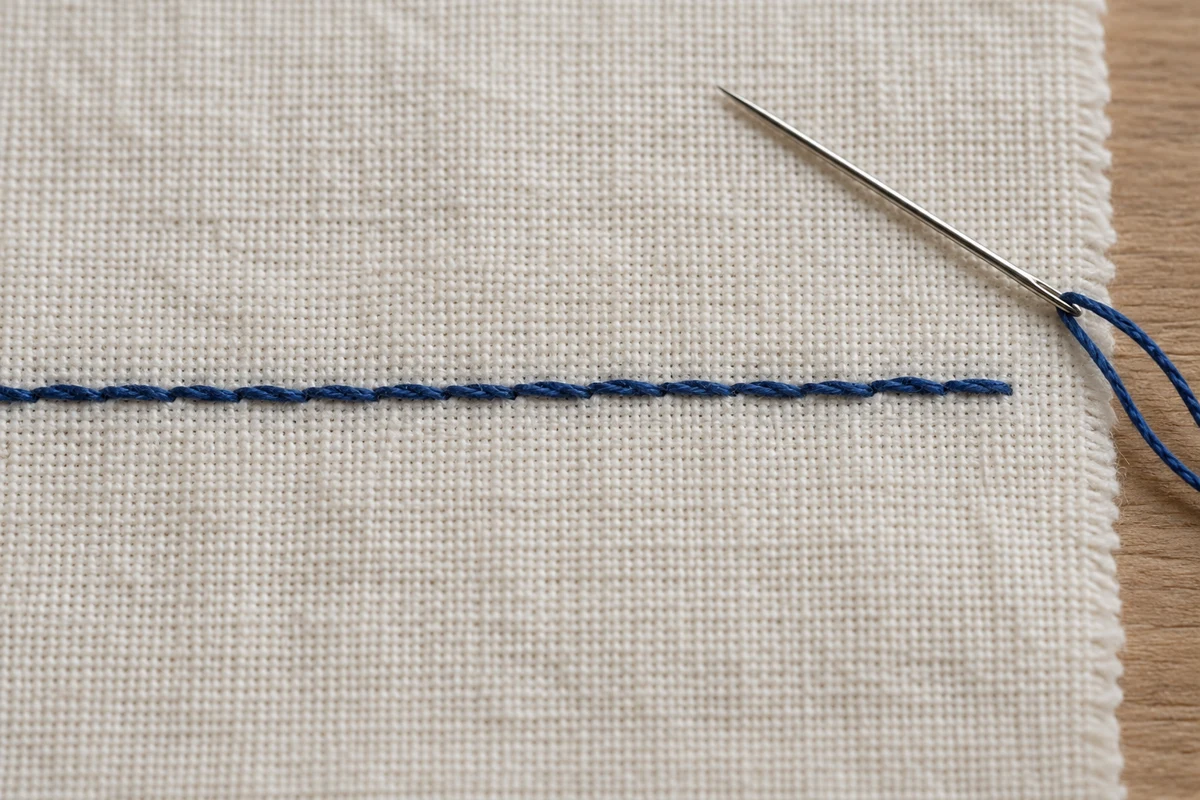
Move back, then advance
Bring the needle up at a starting point. Move backward about 3 mm and insert it. On the underside, travel forward roughly 6 mm and bring it up again. The next backward stitch ends where the previous visible stitch finished. The face of the seam gradually becomes a continuous line.
Longer thread sections overlap on the reverse; that is normal for this stitch. Tighten only enough to bring the layers together without creating a groove. DMC also teaches backstitch as a continuous embroidery outline. For a repair, the stitch size must additionally suit the cloth and the way the seam will be used.
Follow curves and finish within the sound seam
Shorten the stitches around curves so the line follows the shape. Keep their lengths reasonably consistent rather than leaving large gaps and compensating with crowded stitches later. If the needle is difficult to push through, reconsider the layers and needle size. Forcing it through a hard stack makes slipping more likely.
At the end of a repair, overlap slightly into the intact original seam and secure the thread. Inspect by gently opening the layers rather than yanking them apart. Puckering suggests excessive tension or shifted fabric. A heavily loaded strap, safety belt, or similar component needs more than this simple hand-sewing exercise to establish a dependable repair; those applications are outside this project's purpose.