Mount photographs without glue on the image
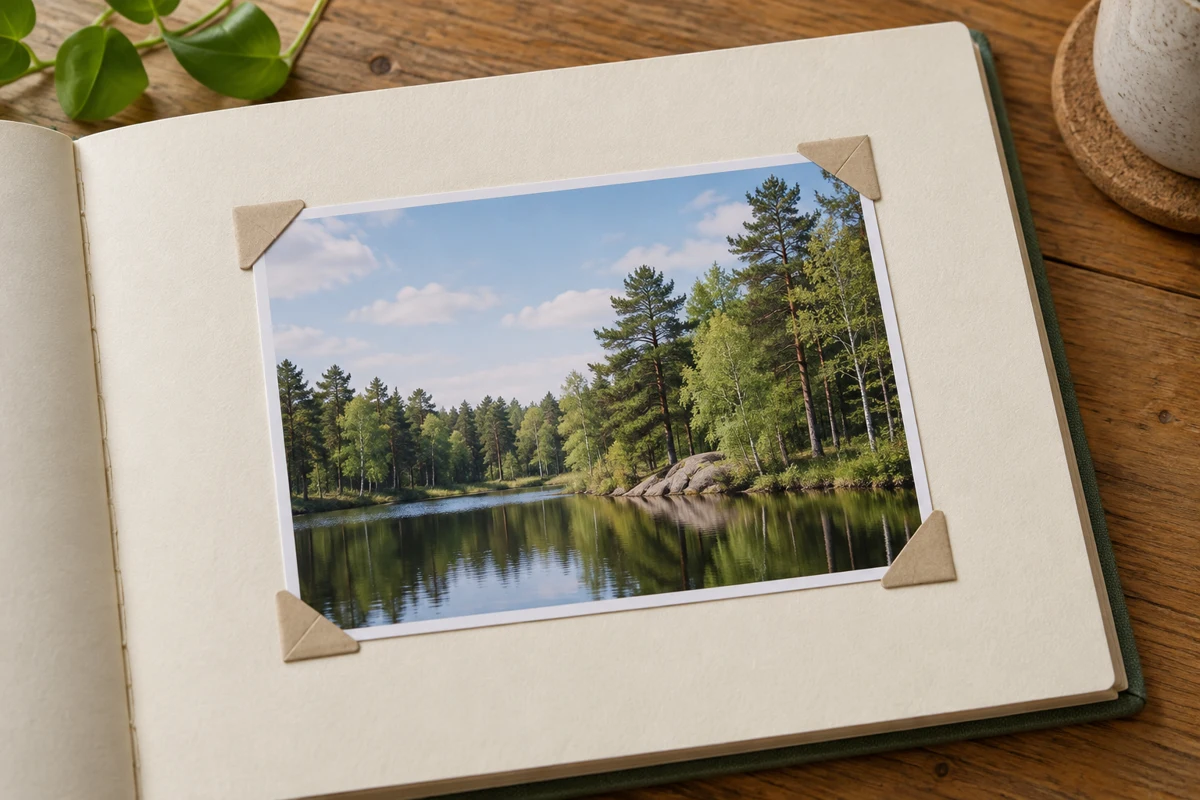
Photo corners hold a print at its edges without putting adhesive on the image or its back.
Distinguish a display copy from an original
A newly printed copy is usually easier to work with for changing decorations than a unique family original. Use a copy for the design and keep the original separately. Even without adhesive touching the photograph, unsuitable board, pressure and light can affect it. A homemade mount is not automatically a long-term preservation enclosure.
For originals, choose corners and backing materials specifically intended for photographs. The Library of Congress recommends appropriate enclosures and photo corners rather than adhesive on the print. An acid-free label alone does not describe every property relevant to photographic materials. Historic or damaged photographs deserve specialist advice instead of an experiment with unidentified scraps.
Position the corners around the print
Set the photograph on its backing and align it with a ruler without rubbing the image. Slip two corners over the lower corners of the print and mark their positions on the backing. Attach only the holders according to their instructions, not the photograph itself. Add the upper pair and check the alignment before pressing everything into place.
Leave a little movement. A photograph held under tension between four corners can bow. The holders should secure it rather than flatten it by force. Handle the print by its edges with clean, dry hands, and keep food, drinks and stray adhesive away from the work area.
Make removal possible
Practice removing an expendable copy from the corners. Usually one side can be eased free without sharply bending the photograph. If the fit is too tight, reposition the holders rather than creasing the print every time it is changed.
On a greeting card, the corners may be part of the decoration. For longer storage, suitability of the complete material combination matters more than appearance. Keep the mount away from direct sunlight and moisture. Label the backing or a separate sleeve rather than the image surface. The arrangement can then change without subjecting the photograph to another adhesive treatment each time.