Find the grain direction of paper
A gentle bend test helps you place folds and notebook spines in a direction the paper accepts.
Compare two directions
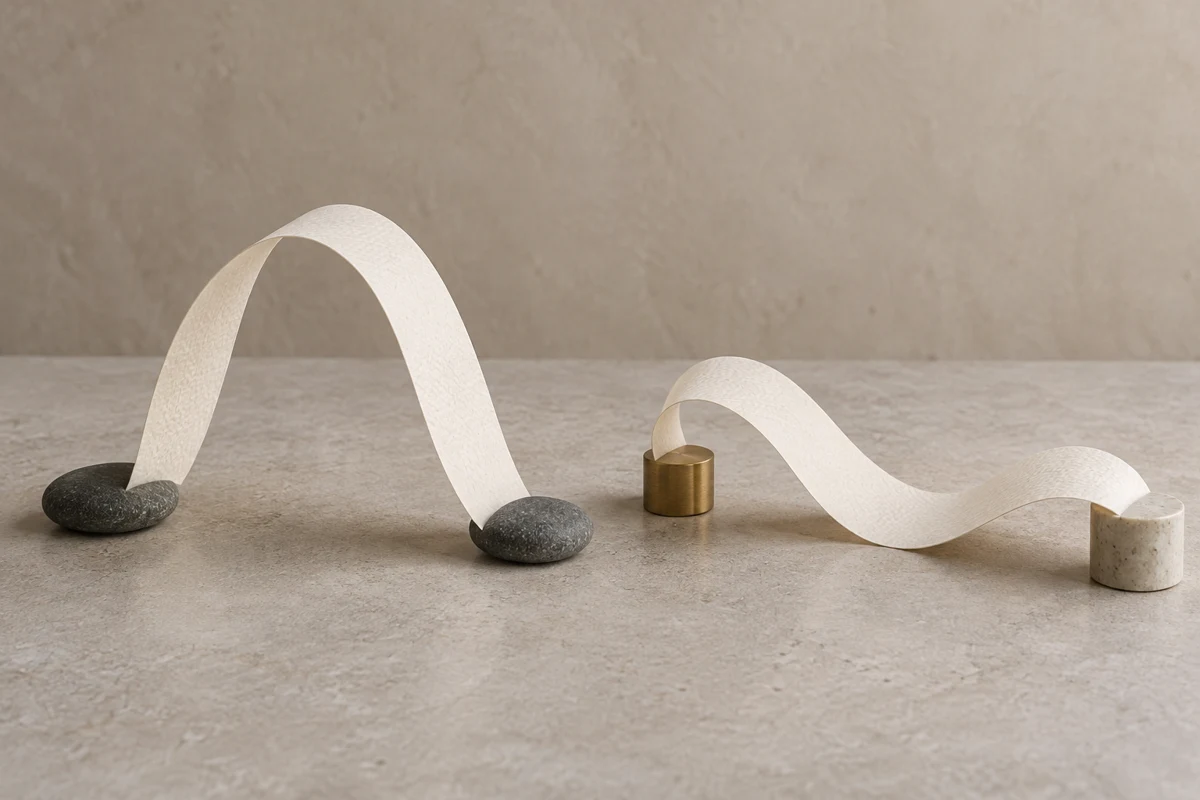
Paper does not always bend equally in every direction. In many machine-made sheets, the fibers tend to align along one axis. That matters little for a flat gift tag, but it can affect how a greeting card closes or how pages turn in a small notebook. Grain direction is worth checking before you divide a large sheet into smaller blanks.
Hold the sheet in a loose, broad curve without pressing its edges together. Rotate it a quarter turn and repeat. The direction offering less resistance is your first clue. Keep the curves similar in size so that a different amount of leverage does not confuse the comparison. Heavy coatings and unusual paper blends can make the difference difficult to feel.
Label a small test
On an expendable offcut, mark how it sat within the original sheet. Fold one sample in that direction and a second sample across it. Look at the surface of each fold, but also notice whether the paper stays comfortably closed or springs open. For card making, the smoother fold with fewer disturbed fibers is generally the more useful result.
Once you identify the direction, add a small pencil arrow to the back of the remaining sheet, running along the fibers. Keep it outside the finished visible area. A pile of rectangular scraps may contain several grain directions even when all the long edges point the same way. Treat uncertain pieces individually rather than labeling the entire pile from one test.
Let the project determine the compromise
For a sewn notebook, arrange the grain parallel to the spine where possible. A folded card benefits from the same relationship. A box has folds in two directions, so you cannot satisfy that preference everywhere. Give priority to its main or longer folds, then test the others with a score line.
Grain direction is not a verdict on whether the paper is good or bad. An awkwardly oriented offcut can still become a flat collage shape or tag. If a printed motif only fits across the grain, a smaller design may be preferable to forcing a large fold. Keep labeled samples: an arrow remains meaningful after trimming, while a note saying “the long side” may no longer describe the same edge.