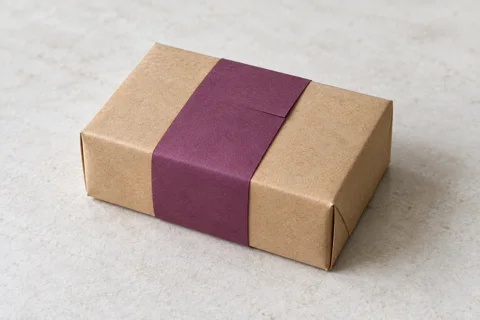
A folder from sturdy cardstock
A simple folder keeps loose papers together when its spine and pockets match the amount you store.
Measure the contents, including thickness
Stack the papers intended for the folder. Check their height and width, then estimate the thickness of the usual contents. Five drawings need less spine room than a bundle of cut-out templates. Leave a little clearance around the edges so sheets can slide in without curling their corners.
For small notes, start with a cardstock rectangle that folds into two slightly larger covers. Mark two parallel lines at the center, separated by the desired spine width. This narrow spine gives a filled folder room to close. Score the lines with a blunt tool and fold them carefully rather than forcing one thick central crease.
Add separate pockets
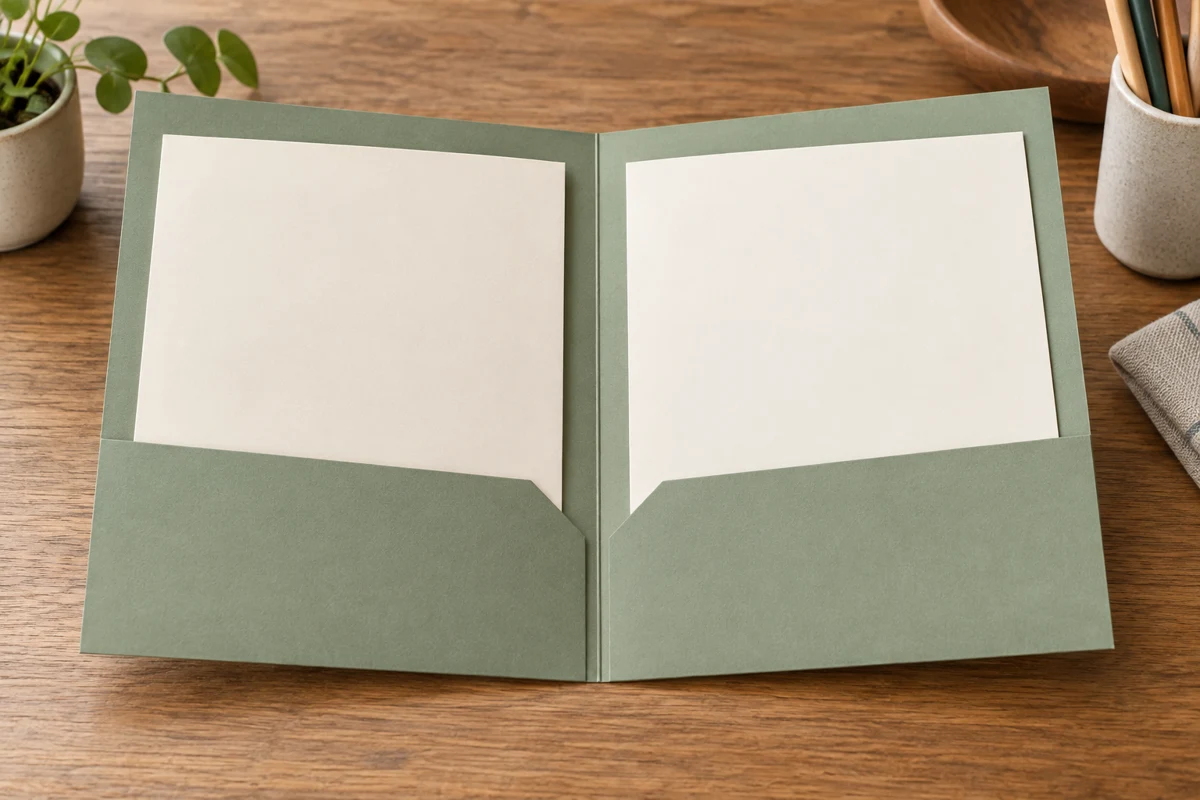
Cut a pocket panel to cover roughly the lower half of an inside cover. Add narrow glue tabs at both sides and the bottom. Fold those tabs backward and position the pocket without adhesive first. Leave its top open; a shallow thumb notch can make papers easier to remove.
Glue the tabs inside the cover edges and clear of the spine. A pocket crossing the spine interferes with closing. Use a loose sheet during the dry fit to identify the opening, then remove it before applying adhesive. Insert it again only after the joins are fully dry. That simple sequence prevents the intended pocket from becoming an accidentally sealed panel.
Resist filling every available space
Once dry, insert a few sheets and open the folder several times. The pocket should hold them without bending their upper corners. If both covers have pockets, include that extra thickness in the spine allowance. Additional glue will not make an overfilled folder work better.
A loose ribbon can hold the closed folder together, but do not tighten it until the covers bow. Valuable originals or long-term storage call for appropriate archival materials rather than unidentified packaging board. This homemade version is for everyday working papers. Label it for the contents you actually intend to keep, so it does not quietly become a container for an ever-growing, unrelated stack.