Test paint on a scrap first
A paint sample is more than a color swatch. Check adhesion, sheen and the effect of successive thin coats on the actual surface.
A hidden surface is not always an equivalent surface
The underside of a wooden object may offer room for a discreet trial, but it only represents the front if both have the same finish. Raw wood and a coated face absorb paint differently. Use an offcut with the same construction or a hidden area whose existing finish is genuinely comparable.
Decide how the object will be used. A decorative sign in a dry room has different demands from something wiped with a damp cloth every day. Attractive color does not establish water resistance, food-contact suitability or heat resistance. Those properties need to come from the particular product's information.
Test the whole coating system
Prepare the sample as the paint instructions require for that surface. Do not automatically sand an unknown old coating. Establish what it is and whether hazardous older paint may be present before creating dust. A clean blank of known material is often the simpler choice for a small craft project.
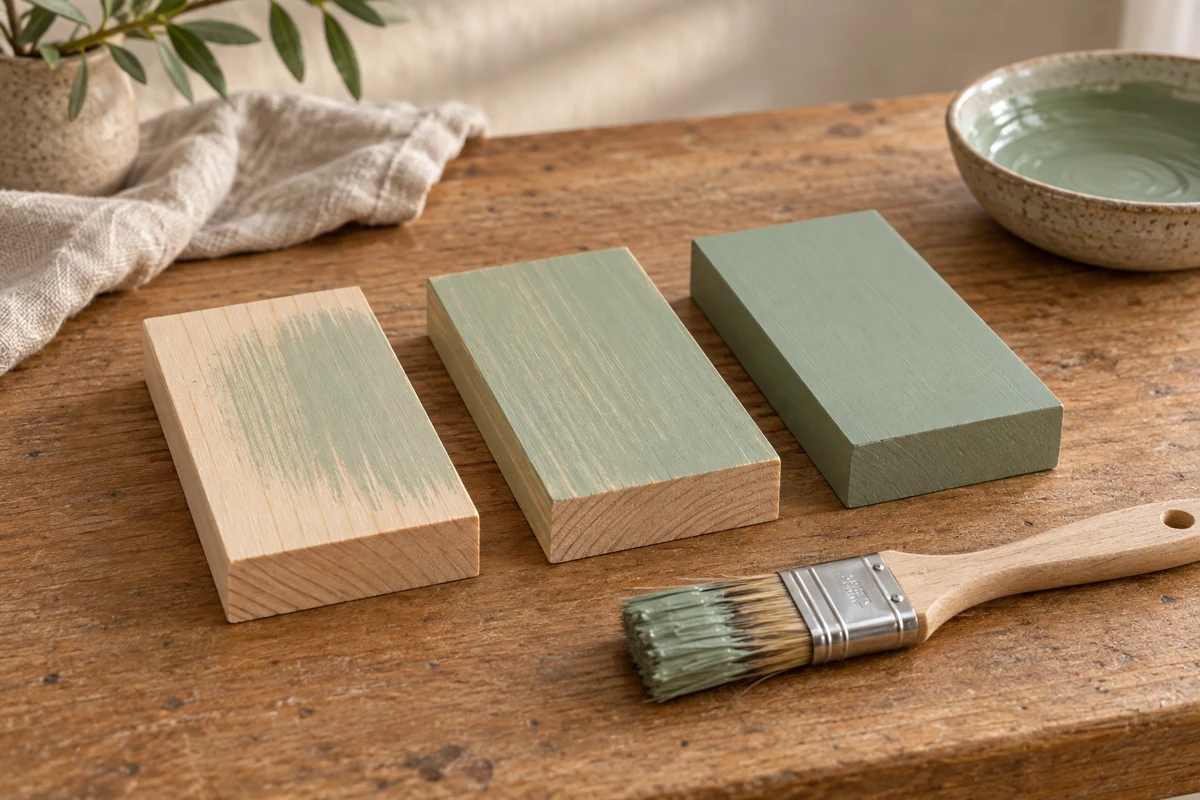
If the intended system includes primer, include primer in the trial. A test without it says little about a finished piece that will have it. Label separate samples so you can still distinguish one coat from two after drying.
Apply a thin, even coat and respect the stated interval before recoating. A heavy layer can retain brush marks or remain soft beneath an apparently dry surface. Add another coat only when the product and first layer are ready for it.
Look in the light where it will live
Move the dry sample to the intended location. A warm shade can look different beside a cool white shelf than it did on the worktable. Sheen changes the impression too. Light coming from the side reveals texture and brush marks more readily than a straight-on view.
Wait for the specified curing period before cautiously checking ordinary handling. Touching a freshly painted sample does not establish how a later, fully cured finish will perform. If paint releases under normal handling, the material pairing is not ready for the project.
Record the product, shade, preparation and number of coats. Test any proposed protective topcoat as well because it can change both color and sheen. Products from different systems are not automatically compatible.
Keep the small sample with the project notes or near the finished object. It provides a useful reference when making a matching piece later. A screen photograph or the color name on a lid may be less dependable than the actual dried finish.