Store handmade decorations after the season
Paper, fabric and modeling clay need different support. Sort by fragility before putting everything into one box.
Do not move everything straight into the box
Take the display apart in good light and check each piece. Is it clean, dry and still sound? A damp fabric bow or incompletely dried natural material can affect neighboring objects inside closed storage. Do not pack something whose condition is uncertain.
Remove replaceable batteries from decorations where their instructions call for it, and follow the maker's storage guidance for electrical parts. This arrangement concerns simple handmade paper, fabric and modeling-clay objects; technical products retain their own requirements.
Sort by sensitivity to pressure
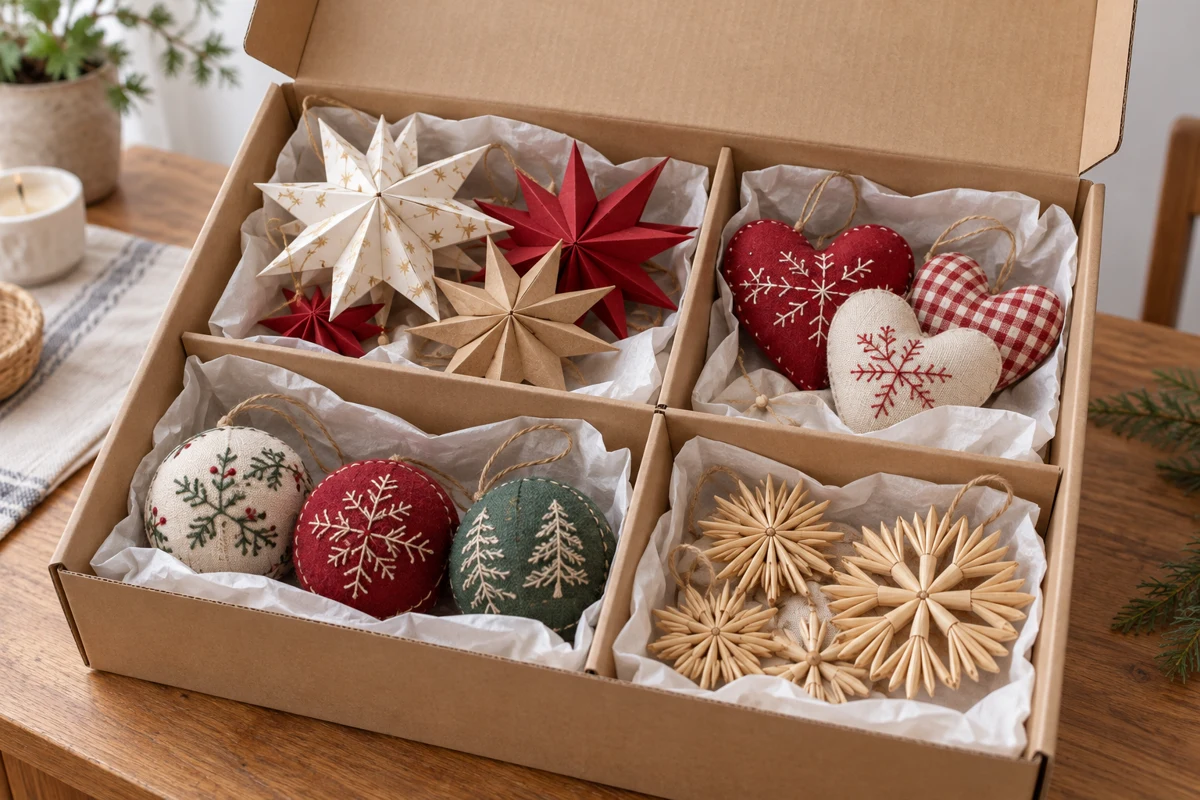
Flat paper stars can rest between clean paper layers or in a suitable envelope. A heavy object above them would damage points and folds. Three-dimensional paper shapes need individual space so they are not compressed.
Lay fabric pieces flat or fold them loosely. Remove clips, hooks and hard tags that could leave marks. Clean only in a way suitable for every component, and pack them completely dry.
Air-dry clay decorations remain relatively fragile. Separate them with appropriate soft layers and prevent pieces from knocking together during movement. A shallow compartmented box may work better than a deep container filled with loose packing.
Make the container movable
Choose a sturdy box. Put heavier pieces low without hiding delicate shapes beneath them. Fill gaps enough to prevent sliding, but do not pack paper so firmly that it creates pressure damage.
Wind cords and ribbons loosely onto separate cards. A string pulled tight around a paper star may cause damage when the box is reopened. Small removable fittings can go in a labeled envelope.
A photograph on the box is optional. A short description such as “paper stars, fabric pumpkins, tags” often suffices. Note any repair needed before reuse so a damaged object is not treated as ready to display for another year.
Reassess when the season returns
Store the box somewhere dry without heavy loads on top. A damp basement or very hot attic may not suit the most sensitive materials inside. Let those materials determine the location.
Inspect again before displaying. Glue joints, brittle threads and paper edges can change during storage. Repair selectively or retain only useful components. Careful storage extends useful life; it does not oblige you to keep every damaged decoration indefinitely.