Make a board for lightweight notes
A small pinboard works only when its pins stay within the material and its mounting suits the wall.
Include pin depth in the plan
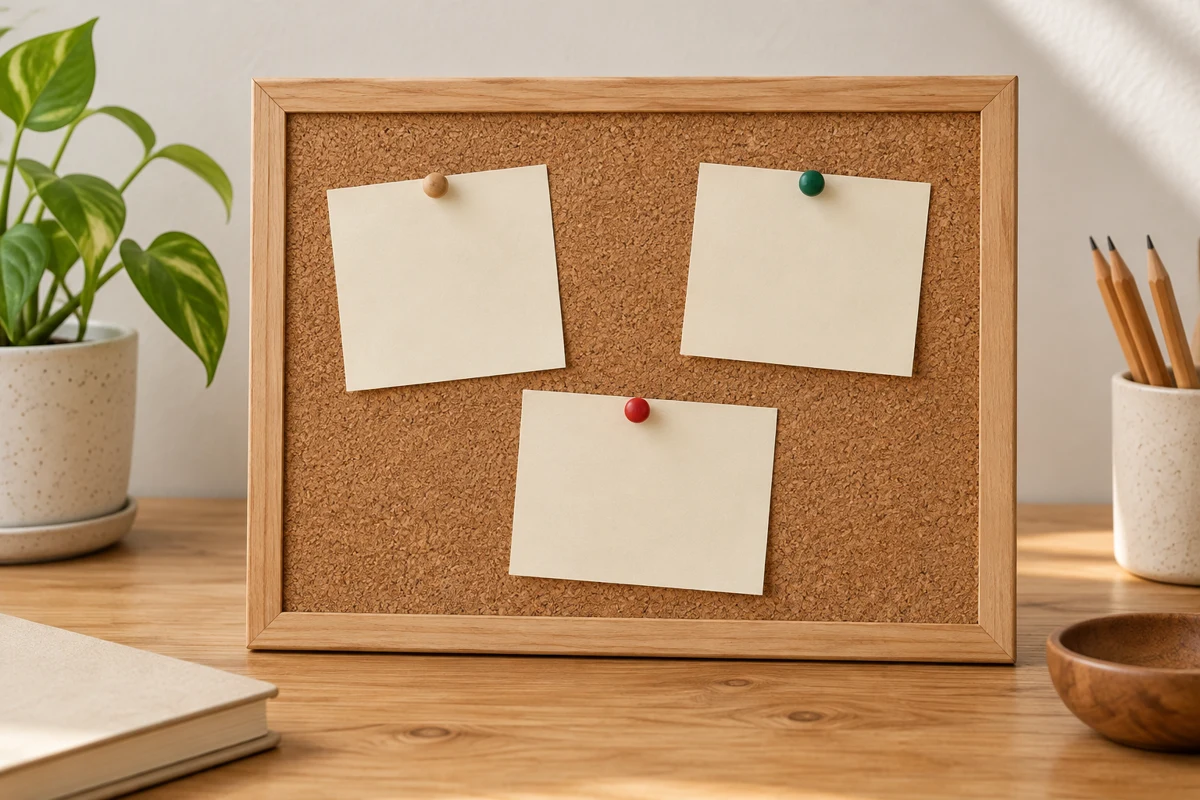
Choose a suitable cork or notice-board panel thick enough for the actual pushpins. A thin decorative cork film over cardboard may be inadequate. Insert a pin fully into a sample and check the reverse. Its point should not unexpectedly reach the wall or a hand behind the board.
Decorate a limited border or add a small heading while keeping the main area usable. Thick paint, hard glue patches, and heavy ornaments interfere with inserting pins. Arrange typical notes on the board to see how much clear space you really need.
Keep any covering lightweight
If wrapping the face with fabric, choose a thin material and test whether pins leave conspicuous holes. Attach it on the reverse without bending the panel. A loose weave may snag as pins are removed. Repeated pinning on a small sample reveals this more directly than the fiber label.
A frame can tidy the outline, but it should not conceal a weak backing or reduce usable depth. Check the complete construction before decorating it. Replaceable heading cards are more adaptable than permanently painted zones when the board's use changes.
Use appropriate mounting hardware
Select fixings for the wall type, total weight, and manufacturer instructions. Include the intended lightweight paper contents, not only the empty panel. A decorative scrap-fabric loop is not a substitute for a suitable hanger. Do not add heavy keys or tools to a board designed around paper notes.
Place it where notes can be reached without leaning over heat or unstable furniture. Keep spare pushpins away from small children. A small rigid container is a better storage place than pins left halfway into a soft border.
Keep the information readable
Try a few notes and observe whether pulling a pin also moves the board away from the wall. Improve the mounting if it does. Remove outdated papers regularly so new ones do not disappear beneath several layers. Decoration should remain quiet enough that current information can be found without searching the whole surface each time.