Choose magazine pages for a color collage
Build a composition from magazine color areas without relying on complete borrowed images.
Search for color rather than objects
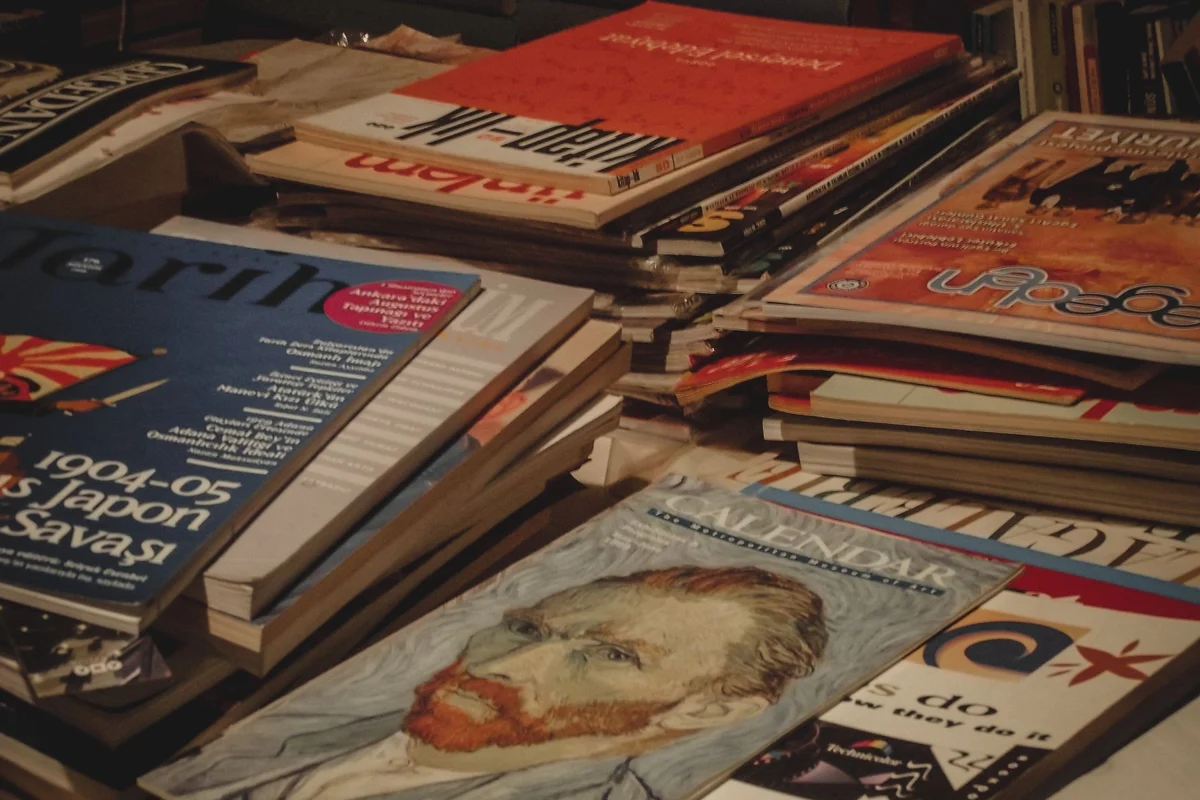
Look through already-read magazines for larger areas of color or texture. A patch of sky, a fabric fold or a blurred background can work as an abstract shape. Cut generously at first so the pieces are not committed to one exact composition.
Arrange the finds by lightness. Similar colors may differ strongly in gloss and paper thickness. View them under the light where the finished piece will be displayed. A reflective page can look quite different upright on a wall than flat on the table.
A limited palette makes the first decisions easier. Try two related tones and one clear contrast instead of using every color you find. Place a piece of white or neutral paper between them to judge spacing. Uncovered backing is part of the composition and need not be filled with clippings. If a fragment interests you mainly because of its original subject, save it for another exercise and keep this one focused on color areas. That distinction helps the final arrangement develop its own structure.
Limit the arrangement
Choose a firm backing and position the largest shape first. Add a few smaller pieces with deliberate overlaps or gaps. Decide whether edges should be torn or cut. Both can appear together, but the difference should serve the design rather than result from rushing.
Photograph a successful layout before taking it apart. Glue from the lowest layer upward using an adhesive suited to the surfaces. Glossy magazine paper needs a bonding test because not every paper glue grips it reliably. Apply thinly and keep sticky fingerprints off the visible faces.
Consider the intended use
Existing clippings can serve a private exercise. For published or sold collages, other people's photographs, illustrations and recognizable designs are not automatically available for reuse. Your own images, hand-colored paper or appropriately licensed material avoid that uncertainty. A small crop by itself does not settle the rights question.
Let the composition dry flat before checking for lifted corners. Attend to those spots locally instead of wetting the entire surface again. If framing it, keep the layers thin enough that they do not need to be forced against the glazing. Note the date and any relevant material information on the back. The finished composition does not need to explain which original everyday picture once contained each color; its arrangement can stand on its own.