Stretch a small fabric panel over a backing
A fabric panel needs aligned grain and a backing that can still be opened for adjustment.
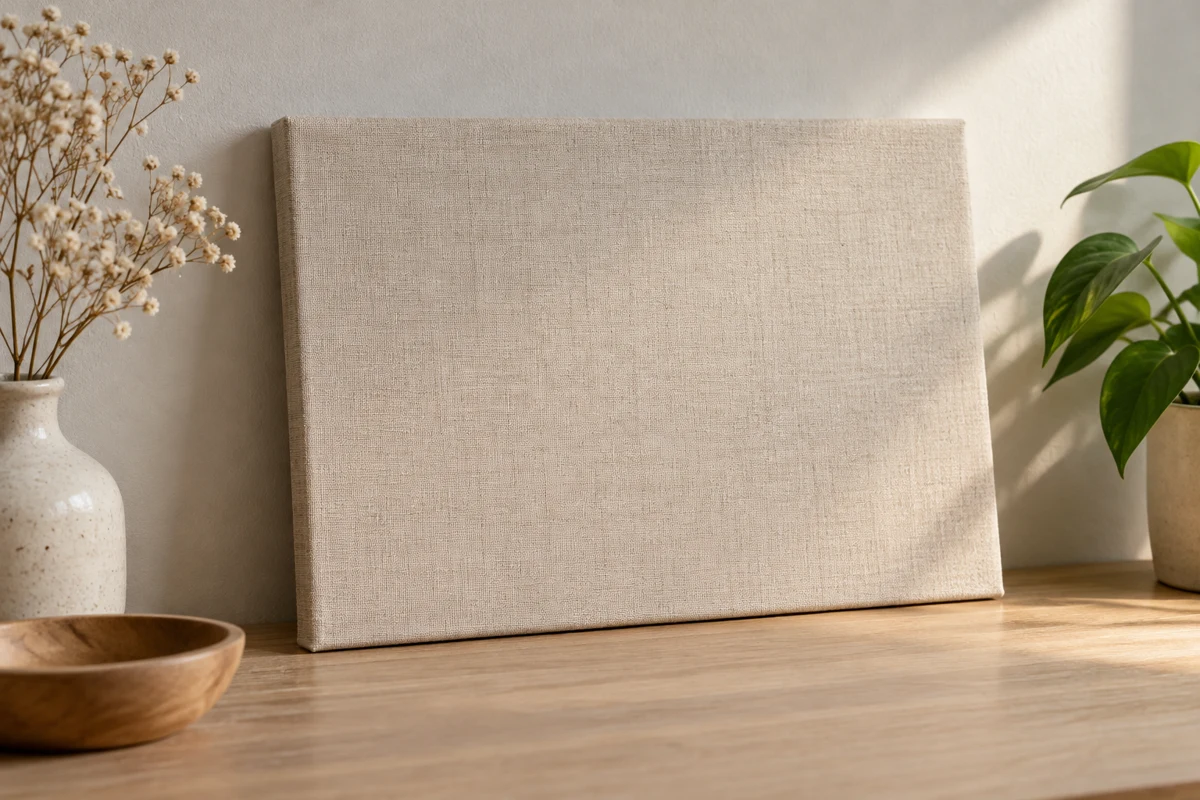
Choose cloth and support together
Use a small stable support with a smooth surface and safe edges. A suitable rigid board or ready-made small frame can provide the base. Thin cardboard bends under tension, while a textured support may show through pale fabric. Test the cloth over the actual backing first.
Allow fabric to wrap around every edge with several centimeters left on the reverse. The amount depends on board thickness and attachment method. Do not cut only to the visible front dimensions. If an important motif sits near an edge, use a paper mock-up to see how much disappears around the side.
Work in opposing pairs
Place the pressed cloth right side down and center the support over it. Align the grain and design. Attach the middle of one side on the back, then the opposite side with light tension. Follow with the remaining two side centers. Inspect the front before forming corners.
Use an attachment appropriate to the support that permits correction where possible. Adhesive tape must suit the materials; ordinary packing tape can leave residue and is not a conservation method. A valuable textile would require a different approach from this simple decorative mounting.
Fold the corners flat
Work outward from each side center. Pull only enough to remove wrinkles. Strong tension can distort a printed grid or bend the backing. Fold each corner onto the reverse like a small envelope, distributing the cloth rather than creating a thick knot that prevents the panel from lying evenly.
Check the front after every corner. If diagonal strain appears, release the latest attachment and rearrange the fold. Trim surplus fabric only after the whole surface is satisfactory, preserving enough margin for later adjustment.
Attach the hanging system to the support
The hanger belongs on the rigid backing and must suit its weight. It should not pull solely on a glued fabric edge. Use appropriate existing hardware or a system intended for that support. Check that loose threads or sticky areas on the reverse will not touch the wall.
Dust gently and dry. A damp cloth can affect the dye, interfacing, and backing differently. Strong sunlight may change colors, so choose a suitable display position. If cleaning the fabric later matters, accessible rear attachments are more useful than a fully glued surface.